Tuesday, February 03, 2026

Event Recap – 2026 PanAm Aquatics Convention!

---- Forwarded message ---------
From: PanAm Aquatics Office <office@panamaquatics.com>


Thank you for attending the 3rd Annual PanAm Aquatics Convention: Advancing Aquatics Through Innovation, Athlete-Centered Development, and Impact.


It was an incredible three days of learning, growth, collaboration, and camaraderie.

  • Day One focused on building the foundations of athlete-centered aquatics.
  • Day Two integrated science, technology, and health to support optimal performance, longevity, and well-being.
  • Day Three explored how to strengthen aquatic ecosystems & build sustainable pathways.
Aquatic leaders across the world came together for an impactful delivery, highlighting the importance of sustainable infrastructure, leadership pathways, and innovation in aquatic equipment, empowering athletes through opportunity, collaboration, and performance-enhancing environments.

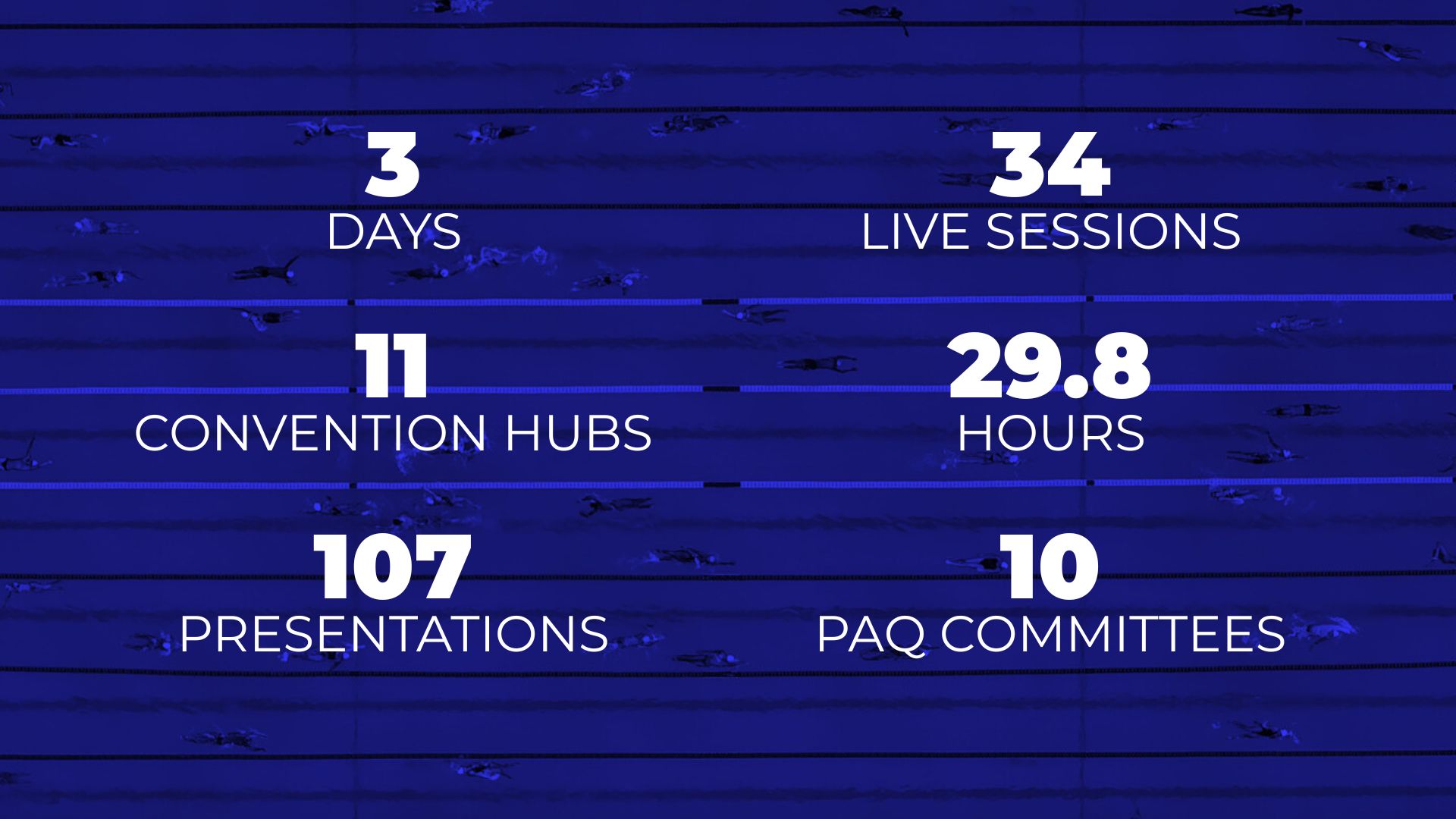
2026 PAQ Convention by the Numbers

https://stratus.campaign-image.com/images/1338476000014229680_zc_v1_1769822467298_closing_session___2026_paq_convention.jpg
     

Convention Highlights

We extend our sincere gratitude to our keynote speakers—Dr. Hagar Elgendy, Dr. Monna Arvinen-Barrow, and Dr. Genadijus Sokolovas—for their exceptional keynote addresses. Each presentation was timely, impactful, and deeply relevant, offering evidence-based insight and forward-thinking perspectives that are critically needed as we continue to shape the future of aquatics across the Americas.

https://stratus.campaign-image.com/images/1338476000014229680_zc_v1_1769823928140_copy_of_closing_session___2026_paq_convention_(2)_(1).jpg

We also wish to recognize the incredible experts from around the world who generously devoted their time, knowledge, and experience to this Convention both though the live program and the digital hub. Their contributions strengthened our collective understanding across disciplines and regions, helping advance best practices in governance, performance, health, safeguarding, and long-term athlete development throughout our continent.


Equally important, we thank the athletes who participated and contributed their voices throughout the Convention. Athlete involvement at every stage of development is essential. Ensuring the athlete voice is present in education, decision-making, and system design strengthens our pathways, improves outcomes, and creates environments where athletes can truly thrive.


Finally, our deepest appreciation goes to our PAQ Convention Planning Committee, PAQ Media & Tech Team, and PAQ Committee members whose dedication, collaboration, and leadership made this event an unforgettable experience. Your commitment continues to drive meaningful progress and reinforces the shared vision of a stronger, more connected aquatic community across the Americas.


Discipline Highlights

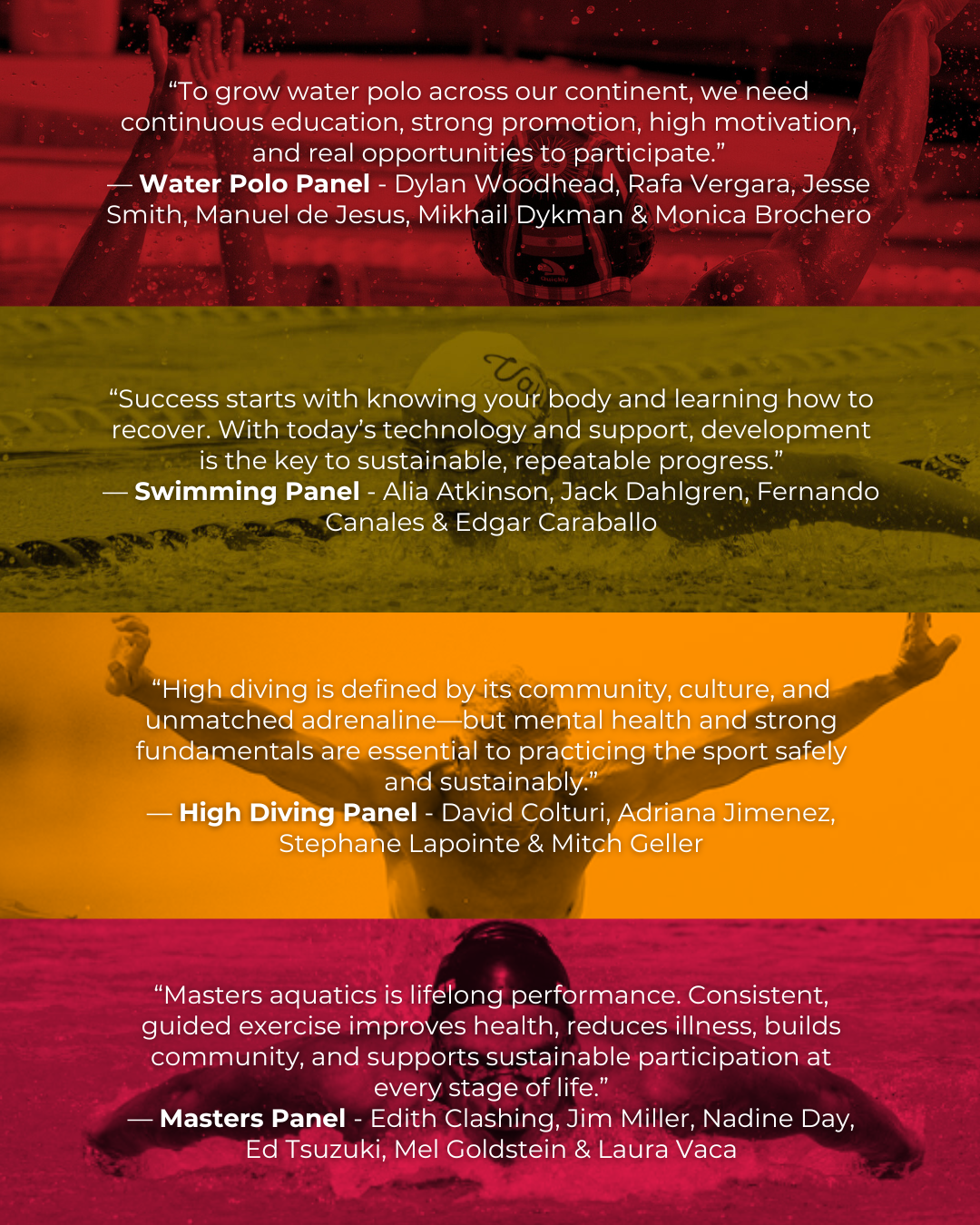
The convention featured dynamic aquatic discipline panels, discussing the state of discipline and emphasizing innovation, performance, technical mastery, athlete support, and sustainable systems.

https://stratus.campaign-image.com/images/1338476000014229680_zc_v1_1770130353651_5_(1).png
https://stratus.campaign-image.com/images/1338476000014229680_zc_v1_1770130363752_4.png
     

PAQ Partner Spotlights

We extend our deepest gratitude to our PAQ Partners for making this event possible: 

https://stratus.campaign-image.com/images/1338476000014229680_zc_v1_1769826643655_logos2.png

  • Fluidra – Showcased infrastructure innovation and sustainable aquatic development, demonstrating how world-class facilities enable communities across the Americas to grow and thrive. 
  • Malmsten – Highlighted the critical role of equipment and collaboration in developing athletes, coaches, and aquatic systems, inspiring continuous innovation and creating optimal performance environments. 
  • Global Sport Technology – Led innovation in sports physiology with expert insights from Dr. Genadijus Sokolovas, with key sessions on nutrition and recovery, heart rate and lactate-guided training, and performance-driven technology in aquatics, advancing smarter, evidence-based athlete development pathways.

Moreover, our PAQ Development Partners were essential to the event, sharing their expertise, emphasizing athlete experience, community impact, and building pathways to ensure aquatics flourishes across our continent through education, innovation, and engagement.

https://stratus.campaign-image.com/images/1338476000014229680_zc_v1_1769826643655_logos2.png
     

Announcements & Exciting Updates

During the Convention, we shared several transformative initiatives for PanAm Aquatics development:

   
https://stratus.campaign-image.com/images/1338476000014229680_zc_v1_1769827812300_copy_of_closing_session___2026_paq_convention_(6).jpg

PanAm Aquatics Proficiency Certification Program

  1. PART I: Foundations 
  2. PART II: Certification Pathways for Technical Officials, Coaches, Event Organizers, and Athletes 
  3. PART III: Certification Completion through Evaluation and Safe Sport Training

     
https://stratus.campaign-image.com/images/1338476000014229680_zc_v1_1769827406115_copy_of_closing_session___2026_paq_convention_(4).jpg

PanAm Aquatics Safe Sport Training Program

Launching soon to support safe and sustainable development across aquatic disciplines.

     
https://stratus.campaign-image.com/images/1338476000014229680_zc_v1_1769828097024_copy_of_closing_session___2026_paq_convention_(7).jpg

Underwater Chats Coach Series

Hosted by Fernando Canales, Sammy McGregor, and Rick Walker, continuing the legacy of Mona Nyheim-Canales.

     
https://stratus.campaign-image.com/images/1338476000014229680_zc_v1_1769828226754_copy_of_closing_session___2026_paq_convention_(8).jpg

Underwater Chats Podcast

Hosted by Valerie Gruest and Javier Ruisanchez, connecting the athlete community in a new and engaging way!


These initiatives mark a monumental moment for aquatics in the Americas, setting a new standard for development, education, and athlete-centered programming.


First Ever PAQ Athlete Forum – REGISTRATION IS NOW OPEN!


We are thrilled to announce the first-ever PanAm Aquatics Athlete Forum, hosted by the PanAm Aquatics Athletes Committee and powered by Athlete Core. 

https://stratus.campaign-image.com/images/1338476000014229680_zc_v1_1769828539415_paq_athlete_forum_dark_vlue_(1).png

This unique event will bring together athletes from across the Americas to:

  • Engage in essential conversations about development, training, and performance

  • Share insights on the athlete experience, directly from the most beloved and decorated aquatic athletes in our continent, as well as some guest appearances from global icons! <

Monday, February 02, 2026

Coaching Burnout and Safety: Uncovering the Hidden Crisis in Our Sports Culture


Survey says, 91.9% of coaches say they love what they do… so why are nearly 85% of them facing burnout and ready to quit?

The Coaching Crisis is here, now. Few are talking about it — but Barry Healey of BC Canada is.

A SafeSport report on its coaches survey began by exposing the hidden crisis in U.S. sports — where passion for coaching is crushed by politics, pressure, and lack of support.

Parents, Politics & Pressure = Burnout

The biggest burnout driver for coaches? It’s not the kids. It’s the parents, the politics, and the impossible pressure.

Coaches Are Quitting in Droves

National survey data uncovers the truth: Coaches are quitting, and it’s not because they stopped caring. Verbal harassment, retaliation fears, and racial + gender disparities — sports coaches are under fire. It’s time we talked about it.

Episode #87 of Heavy Or Not, The OG Swim Guide, examines the U.S. National Coaches Survey from SafeSport. The stark paradox of love‑filled coaching plus crushing burnout is woven in the today’s profession. We want you to consider what it means for the future of athletics.

  • 91.9% of coaches say coaching positively impacts their lives, yet ≈ 85% report burnout in the past five years.

  • Safety culture gaps: athletes are prioritized, coaches’ well‑being is largely ignored; 96% feel prepared to react to harm, but only ~50% hold proactive prevention talks.

  • Disparities by gender, race, and disability: female and disabled coaches face higher burnout and fear of retaliation; Asian and Black coaches report almost 1‑in‑4 fear retaliation.

  • Parent dynamics: verbal harassment from parents (and peers) tops the list of burnout drivers; coaches call it “worse than children.”

  • Recommendations from the field: stronger top‑down leadership and accountability, concrete support for dealing with parents, and expanded training/educational resources.

The full PDF report is within a lesson at the course, CYA as part of the Learning Management System of the International Swim Coaches Association at Read.SwimISCA.org.


Check out this episode!

If you’re a new coach, this is your unfair advantage…


The path to elite swim coaching isn’t what you think—mentors, conversations, and unspoken rules are more powerful than any degree or software.

Episode #84 of Heavy Or Not, The OG Swim Guide explores truths behind elite swim coaching with insights from a 2023 international survey of 123 top coaches. Discover how these pros actually learn, coach, and use (or ignore) technology. And, we wonder have things changed so much in the past few years.

  • Peer‑to‑peer learning dominates – 89% say conversations with other coaches are their primary knowledge source.
  • Mentorship matters – 81% have a mentor; over three‑quarters rate that relationship as “extremely influential.”
  • Coaching philosophies evolve – 97% report their approach changes over time, driven by reflection and “episodic” experiences.
  • Technical expertise over communication – Hard‑skill knowledge tops the list of coach priorities; communication ranks near the bottom.
  • Tech and education split – Only ~52% use performance‑analysis software, while university‑educated coaches are far more likely to read research, adopt LTAD models, and employ advanced tools.

You’ll be shocked how elite swim coaches actually learn—it's not through certifications, but a surprising underground network of mentorship and peer wisdom.

Even though swimming feels ultra‑individual in the water, self‑discipline (62.3%) and self‑confidence (58.4%) outrank “team mentality” as the top life‑skills coaches want their athletes to develop. In a sport where you’re literally alone in a lane, those inner traits are the real secret sauce.

Discipline ranks high. Communication ranks low. The world’s top swim coaches are flipping everything we thought we knew about leadership on its head.

  1. Soak in the episode now.
  2. Then join the conversation – hit reply with your thoughts, questions, or a coaching story you want us to explore next.
  3. Become an ISCA member (just $75) for unlimited access to our Global Library at Read.SwimISCA.org, exclusive content, and the learning laboratory we’re building with WAFSU.org. 

Thanks for being part of the swim‑coach community. Your curiosity fuels the next lap!

Stay warm and buoyant,

Mark Rauterkus
Host, Heavy Or Not – The OG Swim Guide
International Swim Coaches Association (ISCA)

P.S. Got a friend who’d love these insights? Forward this link -- HON.LAP.red —let’s keep the ripple effect rolling!


Check out this episode!

Sunday, February 01, 2026

Athletic Matrix Formulation - From General Prep to Taper


Heavy Or Not, The OG Swim Guide, episode #86, goes to the realm of a TRACK coach. Much of the planning is similar to swimming and other sports.

Unlock the secret behind elite performance: a step‑by‑step guide to building a winning training matrix. Learn how to turn a chaotic schedule into a precise, adaptable roadmap for any athlete.

  • The three‑tier hierarchy: training plan, program, and matrix explained
  • Coach Jose’s 8‑week sprint matrix: phases, intensity, volume, and recovery
  • How to progress workouts safely while boosting performance
  • When and how to adjust the matrix for real‑world athlete needs
  • Core coaching principles: athlete‑centered design, balanced structure, and recovery importance

The full seminar is available, for free, at the website, https://WAFSU.org. A course there is called, Bygone Seminars. Login and pay nothing. 

Dennis and Coach Mark host weekly seminars on Saturdays. Join in and then you can ask your questions to the expert coaches.

1. Why a Structured Plan Is Critical for Athletes

  • “Wing‑it” = high risk of overtraining, injury, and uneven development
  • Inconsistent performance when peak condition is left to chance
  • Planning hierarchy: Training Plan → Training Program → Training Matrix

2. The Three Levels of Planning

  • Training Plan – 30,000‑foot view; season‑long roadmap, ultimate goal, timeline
  • Training Program – Detailed roadmap; phases (general prep, pre‑competition, etc.), weekly objectives
  • Training Matrix – Day‑to‑day “coach’s bible”; specific exercises, reps, intensities for each session

3. Building an 8‑Week Matrix – Coach Jose Case Study

  • Six basic steps

    1. Start with competition date, work backward
    2. Set phase‑specific goals
    3. Choose key skills to develop
    4. Plan intensity, volume, recovery
    5. Assemble high‑level program
    6. Populate the matrix
  • Four clear phases

    • General Preparation – Build foundation
    • Specific Preparation – Hone speed
    • Pre‑Competition – Sharpen race rhythm
    • Taper – Reduce workload, maximize recovery
  • Week 1 (General Prep) sample matrix

    • Monday: High‑intensity acceleration
    • Tuesday: Lower‑intensity tempo run (active recovery)
    • Wednesday: Hard max‑velocity work
    • Thursday/Friday: Rest days
    • Saturday: Full‑body circuit (moderate load)
  • Week 2 – Progressive Overload

    • Same exercises, but:
      • Acceleration effort ↑ to 100%
      • Jump repetitions increased
  • Phase 3 (Pre‑Competition) shift

    • Goal moves from building fitness → sharpening skills & race rhythm
    • Volume ↓ to limit fatigue; intensity stays very high
    • CNS kept “firing” for peak performance
  • Taper Week

    • Workouts become almost rest‑like
    • Light activities to keep CNS primed
    • Primary aim: full physical & mental recovery for race day

4. Flexibility & Real‑World Adjustments

  • Matrix is a guide, not a set of immutable commandments
  • Coach must watch for warning signs: excessive fatigue, aches/pains, external stress (e.g., school exams)
  • If red flags appear → adjust matrix immediately
  • Two core coaching principles:
    1. Know the athlete as an individual (age, history, life context)
    2. Avoid classic pitfalls – e.g., treating recovery days as optional

5. Key Takeaways / Coaching Principles

  • Balance structure with flexibility – a solid plan + the ability to adapt
  • Athlete‑centered planning – design around the person, not just the goal
  • Recovery is a training component, not the absence of training
  • Evolve the plan alongside the athlete – continuous monitoring & tweaking

6. Seminar Context & Call‑to‑Action

  • Concepts presented at a recent UCSSC & WAFSU seminar (Saturday)
  • Invitation to attend future seminars; resources available at wafsu.org
  • Archived seminars (track & field, aquatics) also on the site
  • Closing note: thanks for subscribing & encouraging peers to explore “Heavy or Not.”

Check out this episode!

Monday, January 26, 2026

AI Coaching Wizard: Grant Application for Transforming Youth Swimming into a Community‑Driven Learning Lab


See the proposal on the web at https://lap.red/moonshot-grant-2026/

Reimagining Pool Coaching: AI Connects, Learns, and Empowers Young Athletes

Welcome to episode 85 of Heavy Or Not, The OG Swim Guide, where we reveal a grant proposal to the Remake Learning Network to build an AI‑powered Coaching Wizard for youth swimming programs. We’ll explain the vision, the tech, the partnership model, the budget, and the roadmap to launch.

  • The core concept: AI as a connector, not a director, to spark reflection and conversation.

  • How the Coaching Wizard works: personalized prompts, voice/text reflections, and 3‑D avatar feedback.

  • The ecosystem of partners: schools, nonprofits, tech developers, national coaching networks, and media.

  • Funding breakdown: $92 K total, $50 K grant request, $42 K in‑kind partner contributions.

  • 12‑month rollout plan: co‑design workshops, pilot launch, storytelling phase, and final evaluation.

Turning Pools into Learning Laboratories with AI‑Guided Reflection and 3D Avatars

If you love swimming, tech, or just the idea of turning a pool into a learning laboratory, this one’s for you.

Key Takeaways

  1. AI as a Connector, Not a Director
    We flip the usual AI‑fear script. The Coaching Wizard isn’t a boss—it sparks conversation, reflection, and real‑world connections between kids, coaches, and mentors.

  2. See Learning in 3‑D
    Imagine a digital avatar that mirrors a swimmer’s stroke in real time. Those visual cues make progress tangible—no more “I feel I’m getting better” guesswork.

  3. Co‑Design From Day One
    The project runs a summer co‑design workshop where middle‑schoolers actually help build the tool. Their voice shapes the AI, not the other way around.

  4. Kids Become Teachers
    One of the biggest shifts? Youth teaching youth. The plan trains middle‑school swimmers to mentor younger kids, creating a confidence‑boosting feedback loop.

  5. Tech That Serves People
    The Coaching Wizard is built for connection—it prompts reflection, guides dialogue, and fuels empathy, proving tech can be a bridge rather than a surveillance device.

Fun Fact

The total first‑year budget is $92K, but $42K of that comes from in‑kind partner support.

Talk about a true “village” effort!

Ready to help?

Catch the full video in the link above and also on our YouTube channel, Spotify, or wherever you get your podcasts.
We’ve also dropped a quick link to the proposal on LAP.red if you want to see the grant application yourself.


Check out this episode!

Tuesday, January 13, 2026

College Football Is Broken — This Radical Fix Might Save It


With chaotic realignments, rigged outcomes, and rising costs — this proposal might present the best hope to save the sport we love.

This episode breaks down a bold proposal to reset everything — from the playoff system to who even gets to compete.

The NCAA system is broken — and Heavy Or Not, episode #83, lays out the urgent blueprint to fix it.

From rigged playoff paths to disappearing rivalries, NCAA Division I football has become less about performance and more about power. In this summary of the 4Rs.org reform proposal, we explore a bold new structure: 80 top teams, regional pods, and real accountability with promotion and relegation.

Whether you love or hate the idea, this plan puts fairness, geography, and competition back at the core of the game.

  • Comment your thoughts — would your school survive under this system?

  • Share this with fellow fans, athletic directors, or anyone in the college football world.

  • Full source materials and visuals: [4Rs.org]

Episode #83 – Heavy or Not: The OG Swim Guide


Check out this episode!

Monday, January 12, 2026

Relegation Revealed: How Promotion Can Revitalize American Sports and College Football


Relegation & Promotion as part of Sports Reform, especially for NCAA Football D1 Pods

In Episode 82 of Heavy or Not, Mark Rauterkus and Barry Healey break down how relegation and promotion work in European soccer and why these concepts could transform American sports. They dive into the mechanics, incentives, and how a U.S. version might look.

  • How parachute payments soften the financial blow for relegated clubs

  • The playoff system that lets teams 3‑6 fight for promotion

  • Real‑world examples: Wolves beating Man U, Canadian owners climbing from the bottom

  • Why a tiered “two‑tier” college football model could succeed in the U.S.

  • Applying relegation concepts to MLB and other American leagues to curb public‑funded stadium builds and keep competition fierce.

Details of the college football reform structure elsewhere at the Substack and also with the Sports Reform web site, https://4Rs.org.

Also see:


Check out this episode!

Saturday, January 10, 2026

Steps for Fixing NCAA DI Football: Structure Changes Begin by Blowing Up the Conferences. Return to Regional Rivals


College football needs a structural reset, and Mark Rauterkus lays out a clear, geography‑first plan for a top‑flight “pod” system.

In this episode we break down the proposed 80‑team tier, regional pods, and how promotion and relegation would work.

  • The 80‑team “top tier” built on performance, not brand prestige.
  • Eight regional pods (Gridiron, Trench, Tackle, Pressure, Block, Blitz, Huddle, Grandstand) and their member schools.
  • Promotion/relegation: yearly movement of five teams between the top tier and sub‑tiers.
  • Preserving traditional rivalries and reducing travel through geographic clustering.
  • How the model controls spending, improves competitive balance, and gives every program a pathway forward.

Rethinking College Football: A Geographic Pod System for Competitive Balance and Tradition

“Imagine a season where every game matters, every rivalry lives, and the only thing that moves you up or down is what happens on the field—welcome to the pod‑powered future of college football.”


Check out this episode!

Thursday, January 08, 2026

Cal Baptist Cuts Men’s Swim & Dive Team: A Costly Consequence of Division I Ambitions


From NAIA Champions to Elimination: The Rise and Fall of CBU Men’s Swimming


Check out this episode!

Sunday, January 04, 2026

School Sports Saved -- past position paper turned the tide of massive cuts


In episode #79 of Heavy Or Not, The OG Swim Guide, we break down a prior war with the Pittsburgh school‑district’s Superintendent of Schools.

She had a proposal to slash $600 K in sports programs and the comprehensive counter‑proposal helped keep those programs alive. It wasn’t a victory, but it wasn’t a defeat.

Coach Mark walks through the financial, strategic, and community arguments that turned a budget cut into a reform opportunity.

  • The district’s cut list (high‑school swimming, tennis, golf; middle‑school volleyball, wrestling; all intramurals) and the $600 K savings claim.

  • Highlights from the 45‑page “Alternative to Fewer Sports” position paper that challenged the cuts.

  • How the paper reframed athletics as a revenue source—e.g., the PPSH2O citywide aquatics model.

  • The three‑step reform plan: community‑led task force, an Olympic‑sports incubator, and lobbying for flexible state rules.

  • The broader value of sports: scholarship dollars, academic gains, attendance boosts, and community pride.

More and more we’re going to focus upon the road-blocks to sports participation.

Sadly, the biggest blocks come from those at the top of the organizational chart — the superintendent of schools, the mayor, the athletic directors, the league administrators.


https://aforathlete.fandom.com/wiki/Fewer_Sports_Alternatives_(position_paper)

https://notebooklm.google.com/notebook/8afb93c2-e0db-43be-92af-0c7c45a22211


Check out this episode!

Fwd: GHL NEWS | 1-3-2026


---------- Forwarded message ---------
From: David Ziembicki | GHL NEWS <dave@reply.expertbusiness.com>


In today's issue: mobile app phone updates, SaaS configurator updates, new prospecting tool features

Read on our website / Read time: 5 mins

Welcome to GHL NEWS! In today's issue:

  • Mobile app phone updates

  • SaaS configurator updates

  • New prospecting tool features

Happy New Year GHL NEWS readers! As always, please click at least one of the news items or reply to the message to make sure you continue to receive GHL NEWS!

In 2025, there were 1,221 releases from HighLevel alone!

2026 is going to be a huge year for the GHL ecosystem we are all a part of. Why? Because AI...

If you zoom out a bit from all of the updates we've covered over the last few months, you can see that HighLevel has invested in many foundational changes like the new workflow builder, agent studio, AskAI, and more to AI-enable the platform on a much deeper level than just slapping a chat box everywhere.

In 2026 we'll start to see more cohesive end-to-end AI with agents spanning front-end and back-end scenarios like a human would.

For my agency and one of our clients, in January we're building AI agents for outbound lead generation, inbound sales, and customer support. Our human roles are then going to shift to being the managers of the AI agents.

If you want to follow along with that, you'll want to join the Expert Edge community we're launching soon where I'll be documenting everything we build on GHL this year, hosting a weekly Q&A call, and forums to help you get more out of GHL for your business.

In Q1 I'll also be doing more "ACCELERATE HighLevel" cohorts where I'll be working with small groups of GHL users and agency owners to implement specific solutions (like the sales agents above and others) in their businesses.

If you are struggling with HighLevel or not sure how to leverage the platform for success in 2026, reply to this email and let me know what your biggest goal and challenge is and I'll reply with some ideas for you.

If you are ready to upgrade to HighLevel Pro plan and begin white-labeling/reselling HighLevel in 2026, when you use my link I will help you 1:1 to get up and running quickly!

Now on to the news...

This Week's News:

Sticky Phone Number on Mobile

The mobile app now remembers the outbound phone number you explicitly select and keeps it active across subsequent calls. This eliminates the need to reselect a number after every call, reducing friction and dialing errors—especially when making back-to-back calls. The selected number remains sticky until you log out or reinstall the app, while Local Presence Dialing continues to function dynamically as before. The feature works with both user-assigned numbers and default sub-account outbound numbers. It significantly improves speed, consistency, and confidence for mobile calling workflows.

Custom Dispositions on Mobile

Custom call dispositions are now fully supported on mobile, allowing reps to select a single call outcome immediately when a call ends. These dispositions integrate directly with workflows, reporting, and follow-ups, enabling instant automation without switching to desktop. The mobile experience mirrors web functionality, ensuring parity and consistent data across teams. Sub-account matching ensures dispositions apply to the correct location when calls span multiple accounts. This update improves data hygiene, automation reliability, and on-the-go productivity.

Expanded sound notifications for Live Chat Widget messages

Sound notifications in the Live Chat Widget now cover a wider range of system and lifecycle messages beyond standard chat replies. Alerts now play for chat initiation, acknowledgements, greetings, business-hours messages, form prompts, and redirect messages. All sounds are controlled by the existing Notification Sound toggle, which remains enabled by default. This ensures visitors are alerted during every critical interaction while maintaining full control for businesses. The result is a more responsive and predictable chat experience.

New: Clear Add-On Cost Calculator for SaaS Plans šŸ’”

The SaaS Configurator now includes clearer warnings and a dynamic cost calculator for paid add-ons included in SaaS plans. Agencies can instantly see the total monthly add-on cost and per-subscriber expense billed to them as selections change. The update clarifies that add-ons are not charged to sub-accounts and must be priced into plans for margin protection. This prevents billing surprises and improves pricing confidence. It gives agencies clearer visibility into true cost of delivery.

Accurate Revenue & MRR Insights on Agency Dashboard (Summary Tab)

Revenue and MRR calculations on the Agency Dashboard Summary tab have been refined to include only HighLevel-backed revenue sources. SaaS, reselling, and rebilling now exclusively power reported revenue metrics, eliminating inconsistencies from external data. KPI cards and growth rate charts have been updated to align with the improved logic. Revenue distribution now clearly shows contribution by stream. These changes deliver more trustworthy financial insights and better decision-making confidence.

Media Library for WhatsApp Templates

WhatsApp Template creation now integrates directly with HighLevel's Media Library for header media selection. Users can reuse existing assets or upload new images, videos, documents, or audio without leaving the builder. Assets are automatically filtered by supported media type, reducing errors and rework. This improves consistency, speeds up template creation, and supports richer customer experiences with audio. Teams benefit from a centralized source of truth for approved media.

Prospecting Tool Improvements (Year-End 2025)

The Prospecting Tool now supports marking leads as Closed Won or Closed Lost, enabling true deal outcome tracking. New filters make it easy to segment prospects by status and identify onboarding gaps. A guided onboarding experience helps new users get value faster with step-by-step prompts. These updates bring Prospecting closer to real sales workflows, connecting lead generation to conversion and customer creation. It marks a significant step toward a full lead-to-customer pipeline.

Controlled side-tray behavior via settings icon

Forms, Surveys, and Quizzes now use a settings icon to control the side-tray, allowing users to open and close it without losing selection context. This makes inline editing smoother, particularly on smaller screens where space is limited. Users can focus on content while accessing settings only when needed. The change reduces visual clutter and editing interruptions. Overall, it delivers a more intuitive and flexible builder experience.

Content Corner:

SaaS Mode Mastery (Community Course)

Learn the basics of SaaS mode and the SaaS configurator in this free community course.

Did you know?

When you are ready to upgrade to HighLevel Pro plan and begin white-labeling/reselling HighLevel in 2026, when you use my link I will help you 1:1 to get up and running quickly!

Was this content useful to you? Click one of these and let me know!

Yes it was useful

No it was not useful

Thanks!

David Ziembicki

Expert Business Agency

GHL NEWS, Expert Business Agency and David Ziembicki are independent from HighLevel. The opinions expressed are our own and shall not be interpreted or considered as representations, guarantees, or statement made by HighLevel Inc or any of its subsidiaries, agents, or assigns.

David Ziembicki is a HighLevel affiliate and agency owner, which means he receives a commission when purchases are made through his affiliate link.

This email may contain affiliate links to other products and services. I may receive compensation, at no cost to you, for purchases made through these links as a form of thanks for the referral.


Expert Business Agency
1015 E 2nd St
Suite 2-158
Cle Elum, WA 98922
(206) 895-4030

Sunday, December 28, 2025

Level 1 Swim Secrets from Suriname and Coach Yash


Coach Yash Daryanani shares his Goldwater Sports coaching system, from philosophy to day‑to‑day session management. Learn the core principles that helped him build national teams and clinics.

What you’ll learn in this episode, #78 of Heavy Or Not, The OG Swim Guide:
  • Coaching philosophy: discipline, patience, and individual attention as the foundation for swimmer development.

  • Essential safety & pool‑management practices (pre‑session checks, shadowing, emergency preparedness).

  • Setting clear parent‑coach boundaries and communication rules.

  • Teaching fundamentals for 10‑and‑under swimmers: water confidence, breathing, kick drills, and fun‑based skill games.

  • Sample 60‑minute session structure and effective motivation/ethics strategies for young athletes.

The full seminar is available at the site, WAFSU.org, in a lesson.

See https://wafsu.org/course/swim-coaching-for-instructors-level-1-from-coach-yash-daryanani-of-suriname/

Tune into and download the two shorter Public Service Announcements at the Substack site.

Mastering Youth Swimming: Discipline, Fun, and Fundamentals with Coach Yash Daryanani

Building Confident Swimmers: Goldwater Coaching Philosophy, Safety, and Parent Boundaries

From Pool Deck to Olympics: Coach Yash’s Blueprint for Developing Young Athletes

Discipline, Patience, Individual Attention: Core Values for Successful Swim Coaching

Essential Safety Checks and Pool Management Tips for Youth Swim Programs

Fun Games, Agility Drills, and Technique Fundamentals for Under‑10 Swimmers

Managing Parent‑Coach Boundaries and Maintaining Professional Ethics in Competitive Swimming

Effective Communication Strategies to Motivate and Protect Young Swimmers

Goldwater Level One Coaching: Structured Sessions, Technique Reviews, and Progress Tracking

Overcoming Common Beginner Mistakes: Kicking, Breathing, and Body Position Solutions


Check out this episode!