Thursday, June 18, 2026

How OrcaVision Powers Coaches, Parents and Broadcasters with 20‑40 Data Points Per Second


OrcaVision is about to hit the market place and aims to revolutionize swimming with AI‑powered video analytics that capture 20‑40 data points per second for every swimmer. In this episode of Hevy Or Not, #104, we hear the first part of an interview and introducation from Adi Segal Dori, an entrepreneur and Chairwomen of the two-year-old firm. Learn a bit as to how the system works, why it matters, and what’s next for the sport.

  • Real‑time computer‑vision captures detailed metrics (speed, stroke count, turn efficiency) without manual tagging.
  • Simple installation: one (25 m) or two (50 m) cameras, calibrated remotely and used for both races and training.
  • Scalable data ecosystem: 25,000+ races analyzed, benchmarking tools for athletes, coaches, parents, and broadcasters.
  • Business model & pricing: low‑cost subscriptions, revenue‑share with facilities, free installs for larger clubs.
  • Company background: bootstrapped start, angel funding, upcoming venture round, and plans for global expansion.

Watch the full interview at the ISCA Facebook page, at HON.LAP.red, or in the Heavy Or Not course at WAFSU.org. There are plenty of other insights shared in the later part of the conversation, especially valuable when you can peek at the screen too. 

https://WAFSU.org


Check out this episode!

Monday, June 15, 2026

Fwd: One arm was alright. Two arms was one too many.


---------- Forwarded message ---------
From: Coach Suzanne <coach@steelcityendurance.com>

Hi,

Years ago Terry Laughlin told me something that has shaped how I coach ever since.

Terry, founder of Total Immersion, one of the most original thinkers swimming has ever produced, believed that improvements don't only come from better cues. They come from better sequences. Sequence the cues or focal points well, and elite level skills become accessible for any swimmer.

I've tried to pay attention to this principal for years regardless of who I'm coaching. Last Tuesday I witnessed, in real time, a combination of focuses almost assembling itself as two of us took turns assigning swim drills

I volunteer with a local junior triathlon team. One of our athletes, we'll call him Peter, is a state champion runner. But his swim breathing has been one of his stubborn bad habits keeping him from joining the lead bike back during triathlon races. With Youth and Junior Nationals coming up in just seven weeks, I've got limited time to try and contribute to his race performace!

During the first set of one-armed drills, his breathing was suddenly very clean. Low head, long body, the water around him was calm. He looked smoother than some of the faster swimmers, which i found fascinating.

The next drill set, they got two arms back.

And immediately, he lifted head, rushed recovery arm, and looked like he was fighting for every breath. He's a hard worker and has a ton of energy so he can maintain it for a long time. But it was so different from what he had just done.

Now swimming with 2 arms, his recovery arm seemed to yank out of the water, throwing itself out in front like Count Dracula finishing a cape toss on Sesame Street. The weight of that swinging arm coming forward too soon, folded him into that side on every single stroke, and forced him to lift his head up and over the waves he was creating in order to breath.

He'd proven he didn't need his arm recovery to breathe cleanly. But the moment it returned, his brain did what brains do and reverted straight to the pattern it already knew.

I improvised by having him do a few press outs on the pool deck to feel his arms straightening against some resistance, hoping he could then straighten his arm more in the pool. With each 50 time stroke improved briefly for about 3/4 of a length, before reverting. I was wondering if we were running out of time to get him really tuned up and bombproof to keep up with the lead swimmers, not just for the swim session that morning, but for nationals. .

Then I gave him one last cue:

"Leave that arm behind you for just a little bit longer."

He pushed off and started swimming. I folded my arms and smiled. From the next lane a college swimmer stopped at the end of his set.

"Coach Suzanne, what did you have Peter do? He looks really smooth!"

Peter already knew how to breathe well. We just uncovered it by taking things away, then slowly adding them back in.

It wasn't the last cue that fixed things. It only worked because of everything that came before.

Terry passed away in 2017. I used to love talking with him about these types of lessons after the fact. He would get just as excited about a new sequence that worked for a single athlete as he did about a tested sequence he'd used with thousands.

Nationals is in seven weeks. I know Peter is going to be working hard at every practice.

Will his new breathing skill survive until then?

Illustration of a branching tree structure narrowing down to a single point

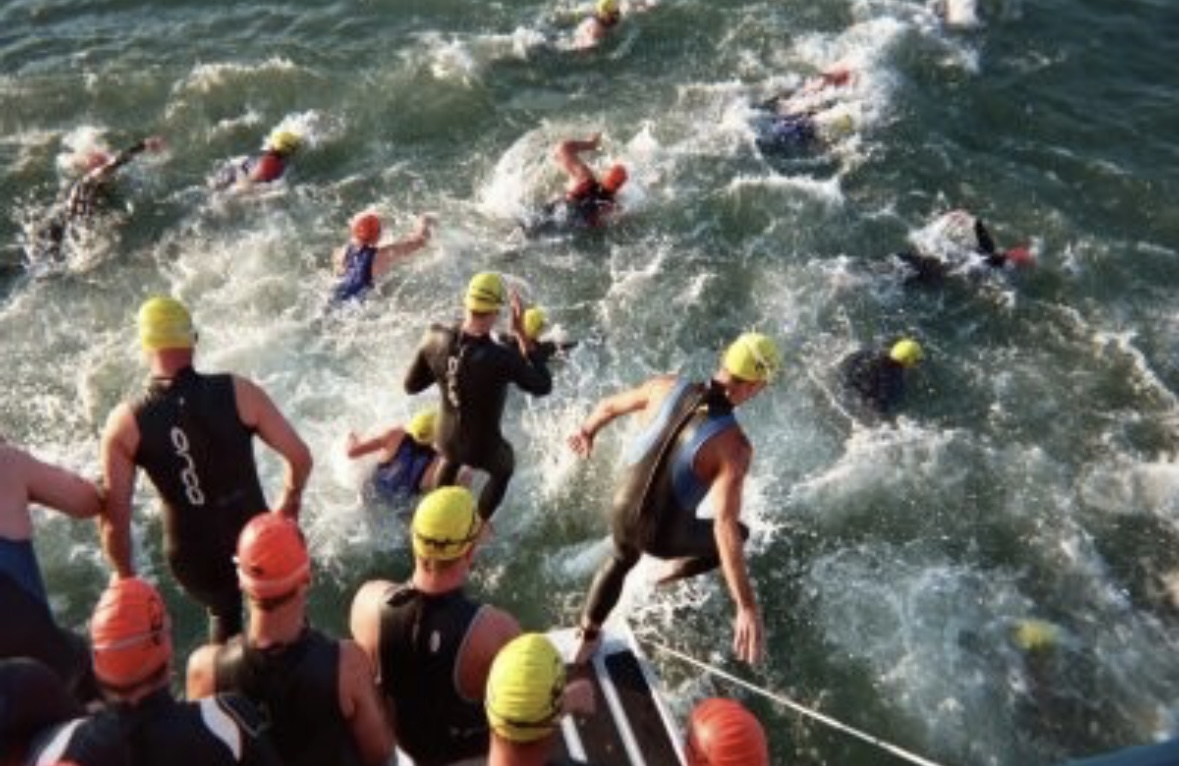
Photo: Escape from the Lake, 2005, Marblehead, Ohio. Photo Suzanne Atkinson

Thanks for reading, and I'd love to hear if you have any similar experiences learning or helping someone learn about triathlon

Train smart, train well, and have fun!!

- Coach Suzanne

Steel City Endurance, LTD

www.steelcityendurance.com

PS: On July 16th we'll be running our free 4 week program for newer and first time triathletes, Ready 2 Tri, in conjunction with the Mighty Moraine Man Fall Multisport Festival, but all athletes are welcome to attend at no charge.

More details will be sent out soon.

Copyright © 2026  Steel City Endurance, All rights reserved.

Our mailing address is:
coach@steelcityendurance.com

Fwd: National Oceans Month Should Also Be About Ocean Literacy

From: The Water Safety Syndicate from The Water Safety Syndicate <angelawild@substack.com>


A recent tragedy in Orange County reminds us that beach safety is not common sense. It is education.
͏     ­͏     ­͏     ­͏     ­͏     ­͏     ­͏     ­͏     ­͏     ­͏     ­͏     ­͏     ­͏     ­͏     ­͏     ­͏     ­͏     ­͏     ­͏     ­͏     ­͏     ­͏     ­͏     ­͏     ­͏     ­͏     ­͏     ­͏     ­͏     ­͏     ­͏     ­͏     ­͏     ­͏     ­͏     ­͏     ­͏     ­͏     ­͏     ­͏     ­͏     ­͏     ­͏     ­͏     ­͏     ­͏     ­͏     ­͏     ­͏     ­͏     ­͏     ­͏     ­͏     ­͏     ­͏     ­͏     ­͏     ­͏     ­͏     ­͏     ­͏     ­͏     ­͏     ­͏     ­͏     ­͏     ­͏     ­͏     ­͏     ­͏     ­͏     ­͏     ­͏     ­͏     ­͏     ­͏     ­͏     ­͏     ­͏     ­͏     ­͏     ­͏     ­͏     ­͏     ­͏     ­͏     ­͏     ­͏     ­͏     ­͏     ­͏     ­͏     ­͏     ­͏     ­͏     ­͏     ­͏     ­͏     ­͏     ­͏     ­͏     ­͏     ­͏     ­͏     ­͏     ­͏     ­͏     ­͏     ­͏     ­͏     ­͏     ­͏     ­͏     ­͏     ­͏     ­͏     ­͏     ­͏     ­͏     ­͏     ­͏     ­͏     ­͏     ­͏     ­͏     ­͏     ­͏     ­͏     ­͏     ­͏     ­͏     ­͏     ­͏     ­͏     ­͏     ­͏     ­͏     ­͏     ­͏     ­͏     ­͏     ­͏     ­͏     ­͏     ­͏     ­͏     ­͏     ­͏     ­͏     ­͏     ­͏     ­͏     ­͏     ­͏     ­͏     ­͏     ­͏     ­͏     ­͏     ­͏     ­͏     ­͏     ­͏     ­͏     ­͏     ­͏     ­͏     ­͏     ­͏     ­͏     ­͏     ­͏     ­͏     ­͏     ­͏     ­͏     ­͏     ­͏     ­͏     ­͏     ­͏     ­͏     ­͏     ­͏     ­͏     ­͏     ­͏     ­͏     ­͏     ­͏     ­͏     ­͏     ­͏     ­͏     ­͏     ­͏     ­͏     ­͏     ­͏     ­͏     ­
Forwarded this email? Subscribe here for more

National Oceans Month Should Also Be About Ocean Literacy

A recent tragedy in Orange County reminds us that beach safety is not common sense. It is education.

Jun 15
 
READ IN APP
 

June is National Oceans Month, a time to recognize the role oceans play in our climate, economy, recreation, food systems, tourism, and everyday life. For those of us who live near the coast, the ocean is more than scenery. It is where families gather, children explore, tourists visit, surfers paddle out, and communities build a sense of place.

The ocean gives us beauty, memory, movement, and connection.

It also requires respect.

That second part is where public education often falls short. We tell people to enjoy the beach. We invite tourists to visit the coast. We sell the ocean as a place of relaxation, escape, and wonder. But we do not always teach people how to read the beach they are walking into.

Earlier this month, five-year-old Amada Mia Brown was swept into the ocean at Treasure Island Beach in Laguna Beach. Her mother and sibling were also pulled into the water and were rescued by bystanders. Amada was later found after an extensive search. The incident happened during a period of dangerous surf and rip-current warnings along the Southern California coast.

I want to be very careful here. A child’s death should never become a lesson wrapped in judgment. Families deserve compassion, not blame. The point is not to analyze one family’s worst moment. The point is to ask a larger question.

Are we doing enough to teach families, tourists, caregivers, and children that the beach is not simply a bigger pool?

Because it is not.

The ocean is a changing environment. It is shaped by swell, tide, wind, current, slope, temperature, rocks, crowds, visibility, fatigue, and panic. A beach can look beautiful and still be dangerous. A shoreline can look inviting and still be powerful enough to knock a child down. A calm-looking break in the waves can actually be a rip current. A child can have strong pool skills and still struggle when the water is cold, moving, and unpredictable.

National Oceans Month is a perfect time to expand the message. Ocean appreciation should include ocean literacy.


The beach can look safe and still be dangerous

One reason beach safety is so difficult is that many hazards are not obvious to the untrained eye.

A rip current does not always look like a dramatic river pulling people out to sea. Sometimes it looks like a calm gap between breaking waves. Sometimes it appears as darker water, foam, churning sand, or a channel where waves are not breaking the same way. Sometimes, to a tourist, it just looks like the easiest place to enter.

That is part of the problem.

Caldwell, Houser, and Meyer-Arendt studied beach users at Pensacola Beach, Florida, and found that people frequently struggled to identify rip currents even when those currents were located near common entry points. This matters because the ability to recognize a hazard changes the decision a person makes before entering the water. A parent who has never been taught what a rip current looks like cannot recognize one by instinct. A tourist standing at an unfamiliar waterline cannot read local swell patterns, tide behavior, or the way a particular shoreline concentrates current.

This is not a failure of intelligence or caring. It is a failure of information infrastructure.

Hatfield and colleagues studied a rip-current safety intervention called “Don’t get sucked in by the rip” and found that beach safety education can be deliberately designed, delivered, and evaluated — not simply posted as a vague warning on a sign that people may or may not read. Their work is important because it demonstrates that targeted education can change what people see and what they choose to do. McCool and colleagues extended that finding by examining the role of risk perception in beach swimming safety. Using a protection motivation framework with more than three thousand beachgoers, they found that people may understand that drowning is possible and still believe the risk does not apply to them. They may see others in the water and assume conditions are safe. They may trust their own swimming ability more than the conditions warrant. They may assume that warnings are meant for weaker swimmers, children, tourists, or someone else.

This is especially important in vacation settings. Tourism changes decision-making. People are excited. They may have limited time at the beach. They may not know local hazards. They may assume a famous or popular beach is automatically a safe one.

Klein and colleagues analyzed beach hazards across oceanic beaches in Santa Catarina, Brazil, over five years and reinforced what risk communication researchers have argued for decades: beach hazards are not random mysteries. They can be studied, mapped, and communicated. Some beaches have identifiable patterns. Some conditions are more dangerous than others. Some areas require stronger warnings, better lifeguard placement, or targeted visitor education.

That means the burden should not fall only on individual families. Beach safety is a shared responsibility between public agencies, lifeguards, tourism offices, schools, swim programs, hotels, and communities. If we invite people to the ocean, we should help them understand it.


Pool swimming is not the same as swimming in waves

Many parents enroll their children in swim lessons because they want them to be safer around water. That is a good and important decision. Swim lessons are one meaningful layer of drowning prevention.

But we need to be honest about what swim lessons can and cannot promise.

Kjendlie and colleagues asked a deceptively simple question: Can you swim in waves? Their study examined children’s swimming, floating, and entry skills in calm water compared with simulated unsteady water conditions. The findings were measurable and meaningful. Children showed an eight percent drop in two-hundred-meter swim performance under unsteady conditions. Weaker swimmers showed larger decrements. Floating and entry skills dropped more sharply than propulsive swimming. Moving water changes the task in ways that calm-water practice cannot fully prepare a child to manage.

Waves change timing. They affect breathing. They interrupt rhythm. They challenge balance, orientation, and confidence. They make floating harder. They make entries more complicated. They can make a capable pool swimmer look significantly less capable very quickly.

This should not make parents feel hopeless. It should make us more precise. Swim lessons matter. Pool skill matters. Comfort in the water matters. But none of those should be presented as a guarantee of ocean safety. The beach asks more of the swimmer. It asks for adaptation to movement, uncertainty, cold, fear, and fatigue. It asks the caregiver to supervise in a more complex and changing environment. It asks the family to make decisions before anyone gets wet.


Cold water changes the body before fear has language

When people think about cold water, they often think about discomfort. But cold water is more than uncomfortable.

Cold water can change breathing, heart rate, muscle control, and decision-making in ways that move faster than conscious thought. Barwood and colleagues studied the psychophysiological basis for “float first” behavior during accidental short-term cold-water immersion and found that in sudden cold water, the instinct to fight, thrash, or immediately swim hard may not be the safest first response. Cold shock triggers gasping and rapid breathing. If that first gasp happens underwater, the consequences can be serious. Panic can make it harder to float, call for help, or follow instructions.

In a separate study, Barwood and colleagues examined breath-hold time during cold-water immersion and found that cold water can sharply affect breath control, even in people who are experienced swimmers in warm conditions. This is an important reminder for parents: a child’s ability to hold their breath, float, or recover in a heated lesson pool may not translate directly to cold, moving water.

Bird, House, and Tipton studied children ages ten to eleven specifically during cold-water immersion and swimming, and their child-specific focus matters. Children are not simply small adults. Their physiological responses to cold, their cooling rates, their confidence, and their endurance deserve specific attention. A child can be a strong, enthusiastic pool swimmer and still be vulnerable in open water that is significantly colder than anything they have practiced in.

For families, the message should be plain: cold water can make swimming harder before a child has time to explain what is happening. For swim teachers, this matters because we often build skills in warm, calm, controlled environments ( which is entirely appropriate for learning), but it means we also carry a responsibility to help parents understand the gap between the lesson environment and the open-water environment.


Supervision has to be active, assigned, and close

One of the most common safety messages families hear is “watch your children.”

The problem is that most parents already believe they are watching.

They are nearby. They are checking. They are looking up between conversations. They are scanning from the towel, managing sunscreen and snacks, keeping track of younger siblings, taking photographs. At the beach, a parent can be physically present and still not be close enough, focused enough, or positioned well enough to intervene in time.

Moran’s observational research on caregiver supervision at beaches helps explain why this matters. Beach supervision is different from pool supervision because the environment itself is constantly changing. Waves, crowds, glare, slope, and current can all affect how quickly a child moves, how visible they are, and how fast an adult can respond. The study documented gaps between what caregivers believed they were doing and what adequate supervision actually required. Many beach drownings and near-misses do not begin with obvious distress. They begin with a moment of drift, distraction, distance, or misjudgment.

For young children and weak swimmers, the supervision message should be simple and concrete: stay within arm’s reach in or near the water. This is what the American Academy of Pediatrics describes as “touch supervision”;, meaning the adult is close enough to physically reach the child if the child submerges or loses footing. For older children, supervision still needs to be close, constant, and distraction-free.

On group outings, one adult should be designated as the water watcher for a set period of time, with no phone, no reading, no alcohol, no photography, and no assumption that someone else is watching. That role should rotate every fifteen to twenty minutes so supervision stays fresh and realistic. The supervising adult should position themselves close to the waterline with a clear view of each child’s face and body, not just a general sense of where the children are in the crowd.

Families should also check in with lifeguards before entering the water. This step is especially important for tourists, who may not understand local surf patterns, rip-current risk, tide changes, or where swimming is safest on a given day. The United States Lifesaving Association and the National Weather Service both emphasize swimming near lifeguards, asking about local hazards before entering, and respecting beach warnings. For families, this turns lifeguards from background safety figures into active sources of local, real-time information.


What swim teachers can do with all of this

Swim teachers are in a powerful position because parents already trust us with water safety information. We do not need to turn every lesson into a lecture. But we can create small, deliberate educational moments that help families think differently about what beach-readiness actually requires.

This is the shift from teaching isolated skills to teaching water competence : the ability to read conditions, adjust expectations, float when surprised, recover from disruption, ask for help, and make decisions before anyone gets hurt. Water competence is not only whether a child can swim a certain distance. It includes judgment, adaptability, floating, breath control, entry and exit skills, environmental awareness, and the capacity to respond when conditions change.

Here is how the research translates into practical, parent-friendly teaching moments.

Create a “pool skill vs. beach skill” parent message. At the end of a lesson, say: “Your child is building important skills here, but the beach is different. Waves, cold water, currents, and uneven sand can make swimming harder. If you go to the beach, stay close and ask the lifeguard where the safest place is to swim.” This takes less than thirty seconds and changes the parent’s frame entirely.

Teach floating as a response, not just a skill. Floating is often taught as a developmental milestone. It should also be taught as a safety behavior. Try language like: “Floating helps your body pause, breathe, and make a plan.” For older children, connect it to real environments: “If you get surprised by cold water or waves, your first job is to get air, float, and call for help.” This directly reflects Barwood’s “float first” research without requiring a physiology lecture.

Practice interrupted swimming. The ocean interrupts rhythm. Lessons can safely introduce small disruptions in a controlled way : asking children to swim, pause, float, roll, and recover; practicing turning around after an unexpected cue; practicing stopping and listening; practicing finding the wall or a trusted adult after a surprise. The point is not to simulate danger. The point is to build adaptability, which is exactly what the Kjendlie wave research shows is compromised when children enter unsteady water without having practiced non-linear responses.

Talk about waves without needing an ocean. A pool cannot fully recreate surf, but instructors can still teach the concept. You can say: “In a pool, the water stays mostly still. In the ocean, the water moves you. That means you may need to float, wait, breathe, and reorient before swimming.” For parents, connect it back to the research: “Children do not always perform the same way in moving water as they do in calm water. That is not a sign of failure , but rather it is just how the body responds to a different environment.”

Give parents better language for supervision. Swim teachers can replace “watch your kids” with something more specific. Try: “At the beach, watching means one adult has one job.” “Young children should be close enough to touch.” “If several adults are present, choose one water watcher at a time.” “Do not assume someone else is watching.” These phrases are simple, memorable, and grounded in what the supervision research actually recommends.

Use National Oceans Month as an educational moment. June gives swim schools, aquatics facilities and swim instructors a built-in platform. Consider creating a beach safety handout for families, a short email on the difference between pool swimming and open-water swimming, a carousel post on how to recognize rip currents, or a lesson theme focused on floating, breath recovery, and calling for help. Small pieces of education repeated across trusted channels can change what families notice before they ever step into the water.

Stop selling swim lessons as a guarantee. This may be the most important shift of all. When we describe swim lessons as “drown-proofing” or imply that a child is “safe” because they passed a level, we may unintentionally increase parental overconfidence. A stronger message is: “Swim lessons help children build skills, confidence, and safer responses. They do not replace supervision, lifeguards, barriers, weather awareness, or sound decisions.” That is not weaker marketing. It is more honest education. And it is more accurate to what the research actually shows.


Ocean safety is not a seasonal slogan

National Oceans Month gives us a chance to celebrate the ocean, and that celebration is worth having. But celebration should not stop at admiration. It should include literacy.

Families need to understand that a beautiful beach can still be dangerous. Tourists need to know that local conditions matter. Parents need supervision plans that are active, assigned, and realistic. Children need skills that go beyond smooth pool swimming. Swim teachers need to help families connect lesson skills to real water environments. And all of us need to stop treating beach safety as common sense, because common sense depends entirely on what someone has already been taught to notice.

The ocean will always be powerful. It will always be changing. It will always ask for humility.

But our education can get better. And National Oceans Month is exactly the right time to say so.

The Water Safety Syndicate is a reader-supported publication. To receive new posts and support my work, consider becoming a free or paid subscriber.


The Research Tidepool

Barwood, M. J., Burrows, H., Cessford, J., & Goodall, S. (2016). “Float first and kick for your life”: Psychophysiological basis for safety behaviour on accidental short-term cold water immersion. Physiology & Behavior, 154, 83–89.

Barwood, M. J., Datta, A. K., Thelwell, R. C., & Tipton, M. J. (2007). Breath-hold time during cold water immersion: Effects of habituation with psychological training. Aviation, Space, and Environmental Medicine, 78(11), 1029–1034.

Bird, F., House, J. R., & Tipton, M. J. (2015). The physiological response to immersion in cold water and cooling rates during swimming in a group of children aged 10–11 years. International Journal of Aquatic Research and Education, 9(2), 162–174.

Caldwell, N., Houser, C., & Meyer-Arendt, K. (2013). Ability of beach users to identify rip currents at Pensacola Beach, Florida. Natural Hazards, 68, 1041–1056.

Hatfield, J., Williamson, A., Sherker, S., Brander, R., & Hayen, A. (2012). Development and evaluation of an intervention to reduce rip current related beach drowning. Accident Analysis & Prevention, 46, 45–51.

Kjendlie, P. L., Pedersen, T., Thoresen, T., Setlo, T., Moran, K., & Stallman, R. K. (2013). Can you swim in waves? Children’s swimming, floating, and entry skills in calm and simulated unsteady water conditions. International Journal of Aquatic Research and Education, 7(4), 301–313.

Kjendlie, P. L., Pedersen, T., Stallman, R. K., & Olstad, B. H. (in press). The effects of unsteady water on the choice of swimming stroke. The Open Sports Science Journal.

Klein, A. H. F., Santana, G. G., Diehl, F. L., & Menzies, J. T. (2003). Analysis of hazards associated with sea bathing: Results of five years’ work in oceanic beaches of Santa Catarina State, Southern Brazil. Journal of Coastal Research, SI 35, 107–116.

McCool, J. P., Ameratunga, S., Moran, K., & Robinson, E. (2009). Taking a risk perception approach to improving beach swimming safety. International Journal of Behavioral Medicine, 16(4), 360–366.

Moran, K. (2010). Watching parents, watching kids: Water safety supervision of young children at the beach. International Journal of Aquatic Research and Education, 4(3), 269–277.

National Oceanic and Atmospheric Administration. (2025). National Ocean Month.

National Weather Service. (n.d.). Beach safety and rip current safety guidance.

United States Lifesaving Association. (n.d.). Beach and water safety tips.


When you think about beach safety education, what do you think families need most: better signs and posted warnings, more targeted parent education, clearer messaging from swim programs, or public campaigns that reach people before they ever arrive at the beach?

Leave a comment

You're currently a free subscriber to The Water Safety Syndicate . For the full experience, upgrade your subscription.

Upgrade to paid

 
Share


Friday, June 12, 2026

Fwd: Coaches Need Better Learning Systems


--
Ta.
 
 
Mark Rauterkus       Mark.Rauterkus@gmail.com
Mark@Rauterkus.com    <--- causing lots of missed messages, sadly.
Webmaster, International Swim Coaches Association, SwimISCA.org
Coach at The Ellis School for Varsity & Middle School Swimming

412 298 3432 = cell


---------- Forwarded message ---------
From: Mark Rauterkus from Heavy Or Not - The OG Swim Guide <rauterkus@substack.com>
Date: Fri, Jun 12, 2026 at 7:58 PM
Subject: Coaches Need Better Learning Systems
To: <mark.rauterkus@gmail.com>


Coaches are learners.
͏     ­͏     ­͏     ­͏     ­͏     ­͏     ­͏     ­͏     ­͏     ­͏     ­͏     ­͏     ­͏     ­͏     ­͏     ­͏     ­͏     ­͏     ­͏     ­͏     ­͏     ­͏     ­͏     ­͏     ­͏     ­͏     ­͏     ­͏     ­͏     ­͏     ­͏     ­͏     ­͏     ­͏     ­͏     ­͏     ­͏     ­͏     ­͏     ­͏     ­͏     ­͏     ­͏     ­͏     ­͏     ­͏     ­͏     ­͏     ­͏     ­͏     ­͏     ­͏     ­͏     ­͏     ­͏     ­͏     ­͏     ­͏     ­͏     ­͏     ­͏     ­͏     ­͏     ­͏     ­͏     ­͏     ­͏     ­͏     ­͏     ­͏     ­͏     ­͏     ­͏     ­͏     ­͏     ­͏     ­͏     ­͏     ­͏     ­͏     ­͏     ­͏     ­͏     ­͏     ­͏     ­͏     ­͏     ­͏     ­͏     ­͏     ­͏     ­͏     ­͏     ­͏     ­͏     ­͏     ­͏     ­͏     ­͏     ­͏     ­͏     ­͏     ­͏     ­͏     ­͏     ­͏     ­͏     ­͏     ­͏     ­͏     ­͏     ­͏     ­͏     ­͏     ­͏     ­͏     ­͏     ­͏     ­͏     ­͏     ­͏     ­͏     ­͏     ­͏     ­͏     ­͏     ­͏     ­͏     ­͏     ­͏     ­͏     ­͏     ­͏     ­͏     ­͏     ­͏     ­͏     ­͏     ­͏     ­͏     ­͏     ­͏     ­͏     ­͏     ­͏     ­͏     ­͏     ­͏     ­͏     ­͏     ­͏     ­͏     ­͏     ­͏     ­͏     ­͏     ­͏     ­͏     ­͏     ­͏     ­͏     ­͏     ­͏     ­͏     ­͏     ­͏     ­͏     ­͏     ­͏     ­͏     ­͏     ­͏     ­͏     ­͏     ­͏     ­͏     ­͏     ­͏     ­͏     ­͏     ­͏     ­͏     ­͏     ­͏     ­͏     ­͏     ­͏     ­͏     ­͏     ­͏     ­͏     ­͏     ­͏     ­͏     ­͏     ­͏     ­͏     ­͏     ­͏     ­͏     ­
Forwarded this email? Subscribe here for more

Coaches Need Better Learning Systems

Coaches are learners.

Jun 12
 
READ IN APP
 

A strong sport program teaches athletes and coaches at the same time. Plus, the guardians and support staff are part of the culture too. Aquatics can lead by building pathways, badges, mentors, seminars, and publishing systems that help knowledge travel.

That truth of coaches being learners, deserves more attention.

A coach grows through practice, observation, mistakes, mentors, clinics, books, podcasts, athlete feedback, parent conversations, meet pressure, and the quiet work of returning to the deck with a better plan.

The best coaches keep learning because the job keeps changing.

Athletes change. Families change. Schools change. Technology changes. Expectations change. The pool stays familiar, but the work around the water keeps moving.

A modern coaching culture needs better learning systems.

Coaching Knowledge Should Travel

A great coaching idea should travel farther than one pool deck.

A good drill should reach the coach who needs it next week.

A strong talk should become a recording, an article, a worksheet, a short course, a clinic segment, an ebook or printed book, and most of all a sustained conversation. Hopefully, as the words evaporate, as sound waves do, the concepts of coaches are able to linger until they are needed again elsewhere.

A useful lesson from one team should help another team. That is how individuals, teams, sports participation and our coaching profession get stronger. Coaching has always depended on shared knowledge. The most desired step where the hinge resides is to make that sharing more organized, more visible and more useful.

The Deck Is A Classroom

Every practice teaches the athletes. Every practice also teaches the coach.

The coach learns how a group responds to challenges. The coach learns which explanation works. The coach learns which athlete needs confidence, which athlete needs structure, and which athlete is ready for leadership.

That learning deserves a place to land.

A coach can carry notes in the head for only so long. A program grows stronger when the learning moves into systems: written plans, shared resources, videos, checklists, prompts and debriefs. The pool deck becomes more powerful when it connects to a learning network.

We all need Pathways.

Those pathways should be clear, encouraging and practical.

  1. A new coach needs a pathway.

  2. A volunteer needs a pathway.

  3. A junior instructor needs a pathway.

  4. A parent helper needs a pathway.

  5. A lifeguard moving into teaching needs a pathway.

  6. A former athlete becoming a coach needs a pathway.

The first step may be a simple orientation. The next step may be a few core lessons. Then comes mentoring, observation, practice teaching, feedback and more responsibility.

A pathway gives people confidence. A pathway also helps leaders grow more leaders.

Mentorship Belongs In Every System

Mentorship remains one of the strongest forms of coach education. It is also one of the forms that are leveraged the least by a majority of community programs.

A young coach learns by watching a veteran handle a nervous child. A new assistant learns by hearing how a head coach explains a hard set. A junior instructor learns by seeing how a strong teacher corrects without crushing enthusiasm. Those moments matter.

A learning system helps capture and extend them. Mentorship can be supported by office hours, recorded conversations, short notes, reflection prompts, social media postings, book chapters, podcast episodes and shared examples.

As relationships stay human, then the system helps the wisdom travel.

Digital Badges Can Mark Progress

Digital badges and certificates can help “coaching development” become visible. A badge becomes valuable when it helps a person grow into service.

  • A badge can mark completion of a course.

  • A badge can recognize a skill.

  • A badge can show readiness for a role.

  • A badge can help a young helper see a path from participant to leader.

Badges work best when they point to real learning. The badges can connect to specific skills, clear expectations, and useful next steps. In aquatics, that might include water safety basics, lesson support, practice setup, communication, junior coaching, meet work, leadership, or reflection.

Courses and Seminars Should Serve The Coaching Community

A course should make coaching easier to do well. It should give the coach something useful to bring back to the pool.

A strong course can explain a concept, show an example, provide a checklist, offer a short quiz, and invite reflection. It can include video, audio, articles, diagrams and practice assignments.

The best course does not sit apart from coaching. It feeds the work. A coach should finish a lesson with a better phrase, a better setup, a better question, or a better way to help an athlete learn.

Seminars Build Community

A seminar does more than deliver information. A seminar gathers people. Coaches hear one another. Leaders compare situations. Questions become shared work. A local issue becomes part of a larger conversation.

That is why regular learning conversations matter.

WAFSU-style office hours, ISCA education, Heavy Or Not episodes, webinars, clinics, and conference sessions can all feed our modern learning system.

A coach who joins a conversation becomes part of a larger professional circle. That circle helps the individuals and the networked system mature.

Publishing Extends The Lesson

Publishing turns a temporary moment into a lasting resource.

  • A talk becomes an article.

  • A podcast becomes a transcript.

  • A clinic becomes a worksheet.

  • A conference idea becomes a short post.

  • A practice insight becomes a coaching note.

Publishing lets the work keep serving after the room clears.

This is why newsletters, Substack publications, blogs, podcasts, and course libraries matter. They give coaches a place to return. The availability of cut-and-paste content helps those working among the teams to remember what was learned. A coaching culture that publishes becomes a coaching culture that compounds.

Parents And Guardians Benefit Due to Published Content

Coach education helps families. A trained coach communicates better. A trained coach explains progress better. A trained coach handles safety with more discipline. A trained coach understands the difference between pressure and challenge.

Parents and guardians feel the difference. They see a program that knows what it is doing. They hear clearer expectations. They receive better guidance. They gain more confidence in the pathway. Learning systems for coaches become trust systems for families.

Schools and Sport Programs Need Continuity

Schools and sport programs generally live through transitions. Coaches move. Assistants graduate. Volunteers rotate. Administrators change. Athletes age out.

A learning system protects continuity and helps to sustain efforts throughout changes. We all know that change is one of life’s few guarantees.

A system can preserve the core methods of the program. It helps new people enter faster. It keeps standards visible. It reduces the gap between one season and the next. The program becomes less dependent on memory. The learning lives in both its people, and it also lives in the system.

Aquatics Has A Natural Advantage

Aquatics is built for visible progress.

  • A swimmer moves from fear to confidence.

  • A beginner learns to float.

  • A teenager learns to lead.

  • A coach learns to teach.

  • A lifeguard learns to scan and prevent.

  • A program learns how to serve more families.

That progress can be documented through stories, badges, certificates, short videos, skill records and reflection. Aquatics already teaches in layers. The learning system should reflect that depth.

The Next Coach Is Already In The Program

  • The next coach may be standing in lane four.

  • The next instructor may be helping with kickboards.

  • The next lifeguard may be watching from the bleachers.

  • The next program leader may be a parent who starts as a volunteer.

A strong learning system notices those people early. It gives them language. It gives them a role. It gives them a pathway. It gives them confidence. That is how the coaching bench grows deeper and with more options.

A Better System Creates More Leaders

Coach education should produce action.

A better learning system helps a coach plan, teach, communicate, reflect and lead. It helps a program train helpers. It helps families understand progress. It helps schools and communities see value.

The system does not need to be complicated. It needs to be steady.

  • A regular seminar.

  • A useful course.

  • A practical badge.

  • A shared article.

  • A short reflection.

  • A mentor call.

  • A podcast episode.

A clear pathway rolls out the red carpet for citizens to follow from participant to helper to leader. That is how coaching knowledge moves.

The Standard

Coaches deserve learning systems that respect their time and raise their impact. Athletes deserve coaches who keep growing. Parents and guardians deserve programs that communicate with clarity. Schools and sport leaders deserve continuity.

Aquatics deserves a professional learning network that carries knowledge from one deck to the next. The coach who learns keeps the program alive. The program that teaches coaches builds the future.

Our new standard aims to enrich with the AI Coaching Wizard and ground zero is at Arsenal Middle School in Pittsburgh Public Schools.

 
Share
 
 
Like
Comment
Restack
 

© 2026 Mark Rauterkus
108 South 12th Street, Pittsburgh, PA 15203-1226 USA
Unsubscribe

Start writing