From: The Sports Ambassador <thesportsambassador@substack.com>
Date: Sat, Jul 4, 2026

"They have no moral right," Ukraine's opposition to Russia's return to world sportUkrainian Ambassador's one-on-one as the IOC strengthens commitment to 'neutrality'
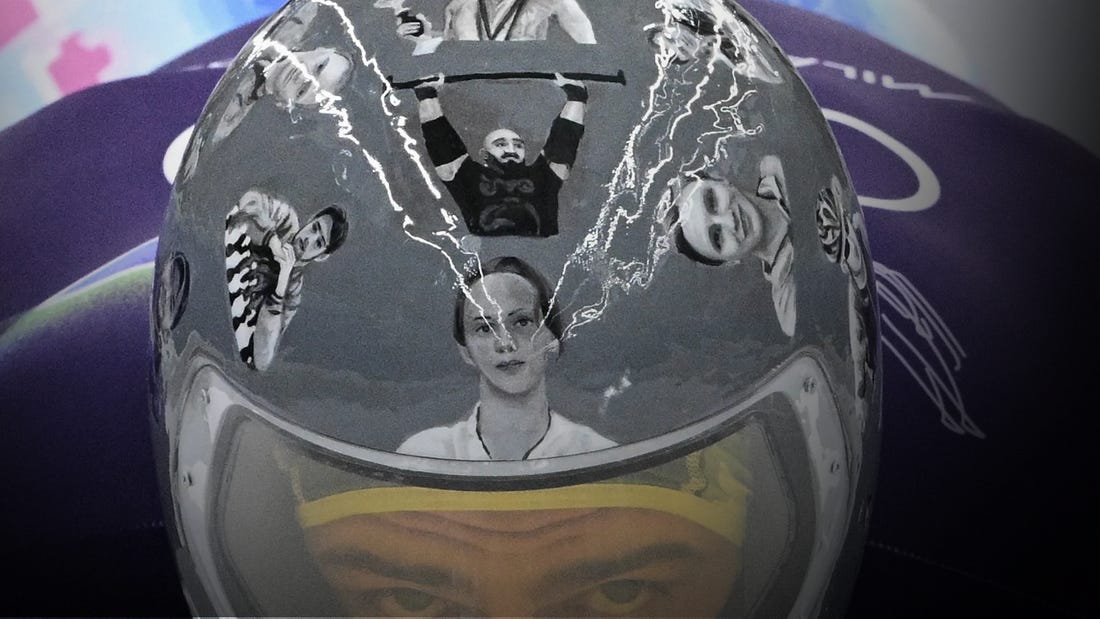
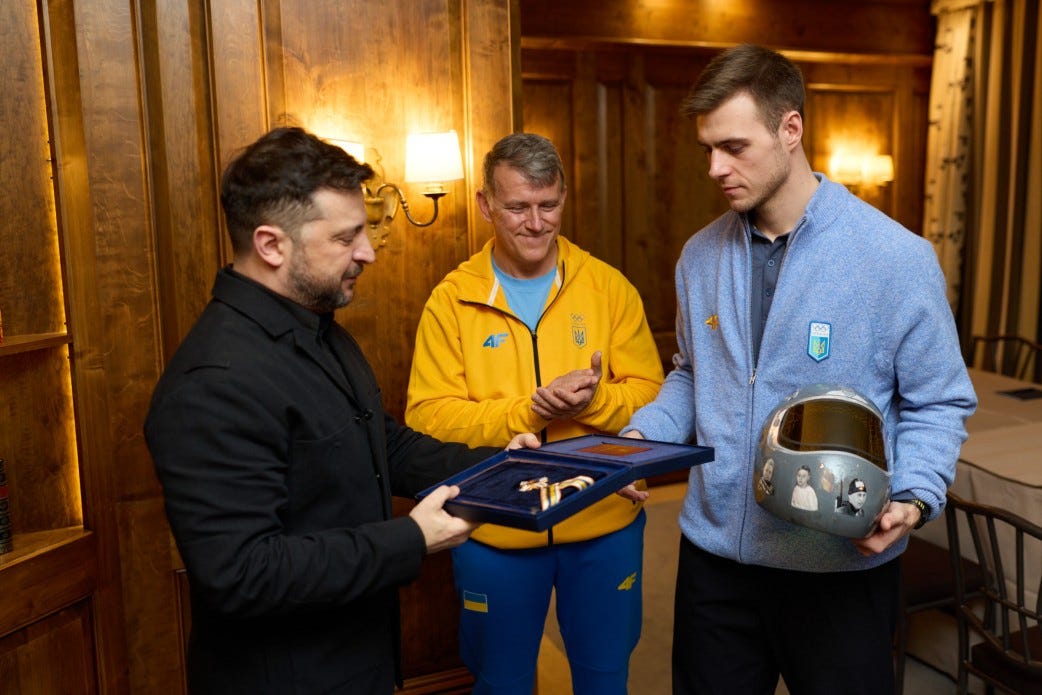
The ‘helmet of remembrance’ worn by Ukraine’s skeleton racer Vladyslav Heraskevych at February’s Milano Cortina Winter games earned him a disqualification from the Olympics, but an Order of Freedom medal from his national president, Volodymyr Zelenskyy.
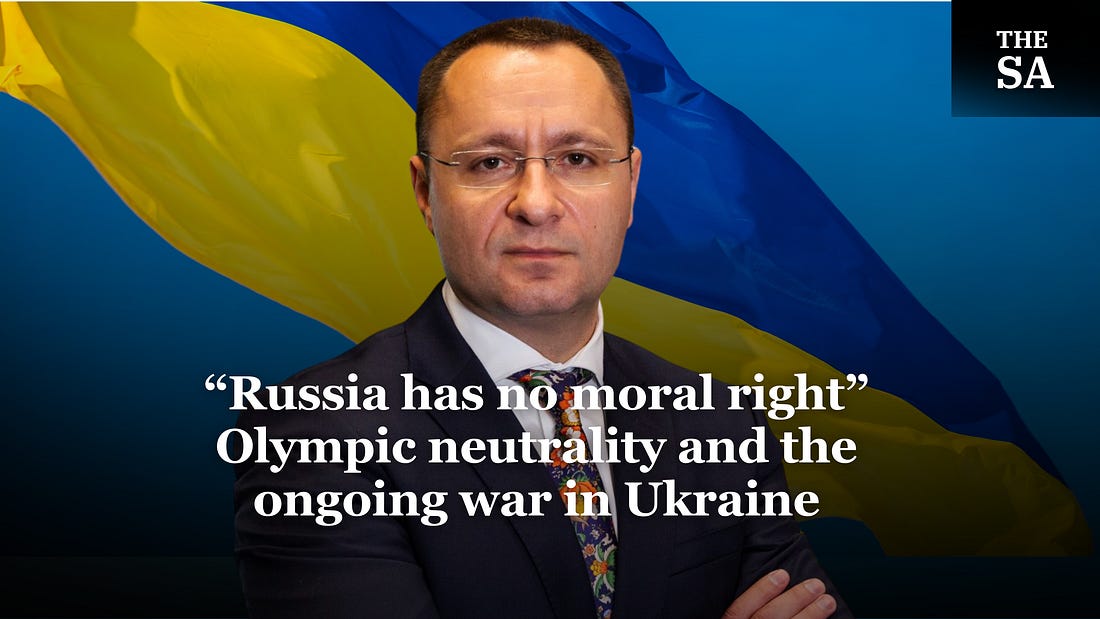
Ukraine’s Ambassador to Australia, His Excellency Vasyl Myroshnychenko His act of resistance at the Olympic games, to highlight the cost of Russia’s invasion of his homeland, means he may be ineligible for the new USD10 000 ‘grant’ the IOC says it will pay to all athletes, providing they have not breached integrity commitments.
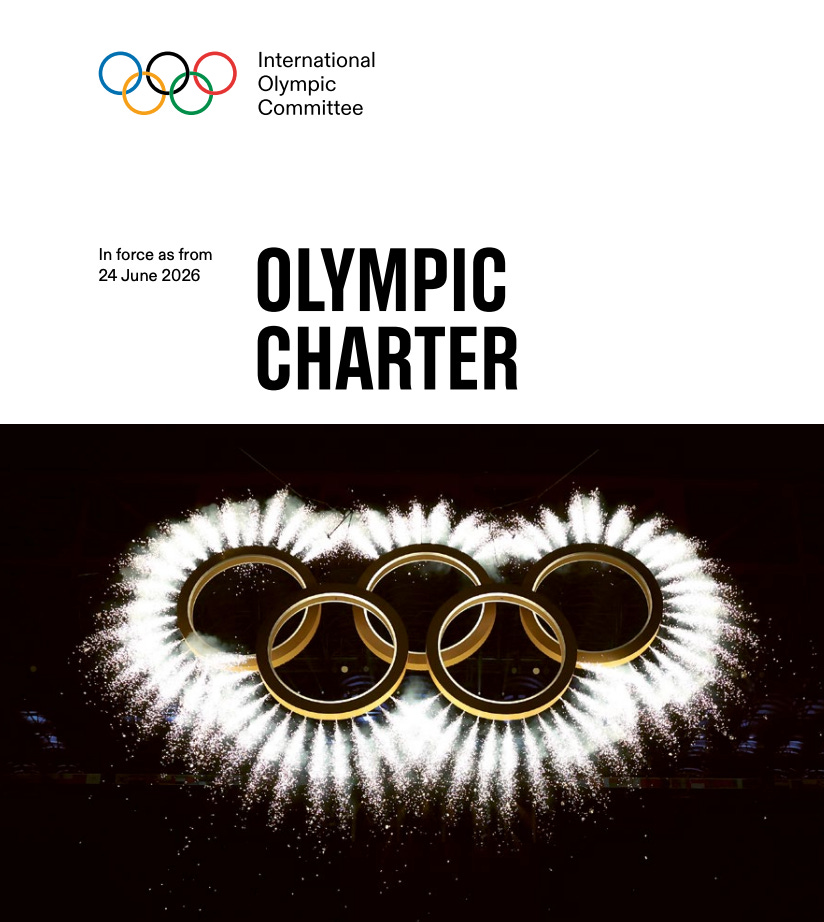
Ukraine’s Vladyslav Heraskevych wearing his helmet of remembrance at the Milano Cortina Winter Olympics, February 2026. Photo Tiziana Fabi/AFP“Sport is politics…from day one when the Olympics were created, it was all about politics.” This Substack is reader-supported. To receive new posts and support my work, consider becoming a free or paid subscriber. The Ukrainian Ambassador to Australia, H.E. Vasyl Myroshnychenko, joined me on the International Day of Sports Journalism to discuss Olympic neutrality, sports diplomacy, and his country’s opposition to Russian and Belarusian athletes being allowed back into world sport. The Ambassador believes the Olympics cannot be separated from politics, even though the IOC has just introduced new wording around ‘neutrality’ in the Olympic Charter, which as of June 2026 states: The mission of the IOC is to promote Olympism throughout the world and to lead the Olympic Movement. The IOC’s role, in part, is… To apply neutrality at all times, free from governmental, cultural, societal or economic pressure. It also requires National Olympic Committees (NOCs) responsible for selecting athletes who will compete at the games to ensure they are chosen not just for their athletic ability, but also: …on their ability to serve as role models who respect, uphold and promote a peaceful society through sport as set forth in the Olympic Charter. …that means taking a position of neutrality. The strengthening of the charter in the past few weeks came off the back of the Heraskevych affair in which he refused to replace his helmet, adorned with images of Ukrainian athletes who’d been killed by Russia in the ongoing war with his country. The IOC had made concessions, including allowing the athlete to wear the helmet in training, but when he refused to put his cause aside during official competition, he was ruled ineligible. Heraskevych is a hero in his country, and in the eyes of many others who saw his act as one of bravery, bringing renewed attention to a war that has continued since Russia’s invasion of Ukraine in 2022. Thanks for reading! This post is public so feel free to share it. “I think it’s very important to call spade a spade,” Ambassador Myroshnychenko said. “And a nuclear power, which is a member of the UN Security Council, is waging the largest war that Europe has seen since the Second World War. “Russians have killed over 600 athletes in Ukraine. Russians have destroyed over 800 sport facilities in Ukraine. And traditionally Russia has been using sports for their propaganda purposes…sport is politics.” The Ambassador pointed to his own childhood memories, and the pride associated with the Soviet team winning Olympic and other sports medals during the Cold War period, including through the boycott era of the 1980s. “There is an aspiration to demonstrate that Russian athletes are out there, performing the best, and it’s part of their Kremlin propaganda story,” he said. “Something which a lot of athletic societies and sports federations miss is where Russian athletes come from…[they] come from two primary clubs. “One club is called CSKA, which is a central sport club of the army. “Another one is called Dynamo, which is a sport club for intelligence agencies, for the ministry of internal affairs and the national guard. “If you look at the medal winners in Beijing Olympics in 2022, twenty-eight out of thirty-two Russian athletes came from either one of those clubs. “So many of those athletes are active-duty servicemen, in either intelligence, or defence forces, or army, or they’re heavily funded by them. “Hence, it makes it so poignant these days, when Russia is waging the war in Ukraine, to actually allow those people to compete, even the fact that they were able to compete under a neutral flag, in Russia the Russian media demonstrate it as a win. “We in Ukraine believe that Russians have no right to compete at all, not even under the neutral flag for what they’ve done to Ukraine and what they keep on doing, including to athletes.” Ambassador Myroshnychenko said it is ‘alarming’ that Russian athletes (and Belarusians who were also banned because of their country’s support of the war on Ukraine) are being allowed to return to various international sports events. “We believe Russians have no reason and have no moral right to be represented in those games. And it’s only after Russia stops the war, only in the future, that they and of course Belarus as well - because pretty much Belarus is run by the Russians - should be even considered to be allowed to be back.” The goal of Olympism, according to the Olympic Charter, is: …to place sport at the service of the harmonious development of humankind, with a view to promoting a peaceful society concerned with the preservation of human dignity.
Asked whether sport could play that role, by providing an arena where warring nations could be brought together, Ambassador Myroshnychenko reflected on South Africa being banned from the Olympics - and much of world sport - from the 1960s until the dismantling of the apartheid regime decades later. He believes the same exclusion is what’s required in the case of Russia. “The sanctions which were imposed on South Africa, and actually their ban on participating in the Olympic Games, was instrumental. It was so important because that put pressure on that government to change the policy. “You have to understand, Tracey, a majority of the Russians support this war in Ukraine. They support the regime. This is not Putin who is killing and raping Ukrainian women. These are Russian soldiers who are doing it. These are people of Russia who believe Ukrainians have no right to exist, who believe that Ukrainians are Nazi fascists, must be killed, dehumanized entirely. “I don’t have to just look at the war crimes that Russia has perpetrated in Ukraine. We now estimate over 150,000 war crimes that Russians have done in Ukraine. And was it done by Putin? It was done by Russian soldiers. Many of those soldiers are part of those sport clubs, either Dynamo or CSKA. “ “Sport is politics. The fact that Australia is hosting Olympic Games in 2032, it’s a major political opportunity for the leadership of Australia, whoever that’s going to be, to promote Australia, to promote Australian products, services, to get more investments, to improve your infrastructure. “That’s a business opportunity that’s also used for political purposes…the [2000] Olympic Games in Sydney, people are still talking about them. They were Legendary. They were well organized. We, Ukraine, opened its consulate in Sydney just because you were hosting the Olympic Games, which then later on evolved into an Embassy in Canberra. But the only reason we did it, because you were a host of the Olympic Games.” Hosting an Olympic games carries significant benefits beyond the field of play. Without such benefits, there would be little reason to host the mega-event; relationships are fostered and strengthened - economically, politically, socially, culturally, and diplomatically. If the IOC opted to discard its commitment to ‘neutrality’, deciding instead to exclude nations for invading others, or expelling those who behave in ways deemed to be in breach of international law, where would that leave other teams who are freely competing today, teams from the USA and Israel, for instance? Where would the IOC draw the line between who to exclude and who not to? “It’s not about whataboutism, okay? I’m speaking about Russia’s war,” Ukraine’s Ambassador said. “The International Olympic Committee includes all the countries of the world. So, this is kind of like a UN, so it’s impossible, of course, I mean decisions are made there by all the countries and different countries have different views and different opinions, and they have their own kind of governance systems. But they are inefficient as much as the UN is inefficient. “Because if the UN was designed to prevent wars and a country which is a permanent member of the UN Security Council, which has nuclear weapons, is waging the biggest war the world has seen in 80 years, what does it tell you about the system? “And this kind of sense, allowing Russians to come back, it’s just like normalizing the relationship. Is it an avenue to talk to Russians? I don’t think so. I just find it extremely offensive actually.” The Heraskevych situation is the most current and relevant example of how neutrality might be enforced in future editions of the games, with repercussions for National Olympic Committees if team members are in breach of their neutrality commitments. Athletes selected for the games in LA 2028 would be well advised to read the detail in the Olympic participation agreement they must all sign. Not only did Heraskevych win the public relations battle in Milano Cortina, but once disqualified he flew from the Olympic village to Germany, where the Ukrainian president was attending the Munich Security Conference. It was from the sidelines of the international gathering that President Zelenskyy awarded Heraskevych the Order of Freedom medal, the country’s highest honour bestowed by presidential decree.
President of Ukraine, Volodymyr Zelenskyy (left), awards the Order of Freedom Medal to Olympian Vladyslav Heraskevych (right), while national coach and Vladyslav’s father, Mykhailo Heraskevych (centre), looks on. Photo: Office of the President of UkraineAsked what he would say to the IOC, if given the chance, Ukraine’s Ambassador to Australia said it wasn’t his place to say anything. “I have nothing to say to the IOC,” Ambassador Myroshnychenko said. “To be frank it was his [Heraskevych’s] choice, he knew what was going to happen and he did it. “I think in terms of the impact he had, it’s just enormous. I’m not sure there’s any other athlete from those games whose name could be recognized. “He’s become a hero in Ukraine, for obvious reasons, but he’s become kind of like a household name for anybody who has any interest in the Winter Olympics. “And I think he argued his case persuasively and clearly and certainly for us, who’ve been watching this large-scale war for the past four and a half years and generally for 12 years, we can closely relate to that.” It is possible to support Heraskevych’s stance and to understand the IOC’s position. To allow one athlete to display a message with political overtones, would mean allowing others to bring their own grievances onto the field of play; some propaganda messages may not be so popular in the global PR stakes. It raises the question, again, as to where a supposed line could be drawn. “From day one when the Olympics were created, this was all about politics. I mean, anything is politics. Every day is politics. I’m sorry, Tracey, but that’s the way it is, it’s the reality of this world. There is a reason why they are all under the national flag. As long as you have a flag there, it’s politics,” the Ukrainian Ambassador said. In a previous conversation with the Ambassador, I had questioned whether the IOC should use the Olympic flag and the Olympic anthem for all medal presentations at the games. This would be a true commitment to neutrality from both the IOC and the athletes who agree to be bound by the Charter. He referred to the proposition during this week’s podcast. “If you don’t have flags at all, and have them compete as individual athletes, it’s not of any interest to anybody.” So, is sport capable of playing a role in finding solutions to some of the most vexed issues we face in the world today? “Sport is just one of the examples where international cooperation happens, but at the same time, it’s not the only one,” the Ambassador said, pointing to the UN and other diplomatic channels. Unlike other examples, though, none has the global reach or symbolism of the Olympic games, with the message that the world can come together in peace. “It’s a message to the world that if you want to change borders by force, if you start the largest war that the world has seen in 80 years, there are consequences for that,” Ambassador Myroshnychenko said. “I mean, of course I’m biased…my country is being destroyed by the Russians. “I’m not trying to be kind of like academic here. I mean you are presenting a kind of different side of it, which I get, right, because to have a conversation we need to have different opinions on that. “At the end of the day, of course we want this war to be over, right? And how can we put pressure on Putin? We can impose sanctions on Putin - on his regime, we can send more support for Ukraine - military support for Ukraine, we can take over Russian sovereign assets to help Ukraine rebuild its sport facilities, including all the infrastructure, or use that money to defend Ukraine. “And the way to put pressure is to actually not allow Russians and Belarusians to perform in different competitions, to impose more sanctions on different sectors of the Russian economy and isolate Russia.” Our conversation has come full circle. Diplomacy is like that, it requires patience. It might be slow, frustrating even, but it’s a hell of a lot better than no diplomacy at all. I am grateful for the time Ambassador Myroshnychennko set aside for our discussion. The entire interview is available here… 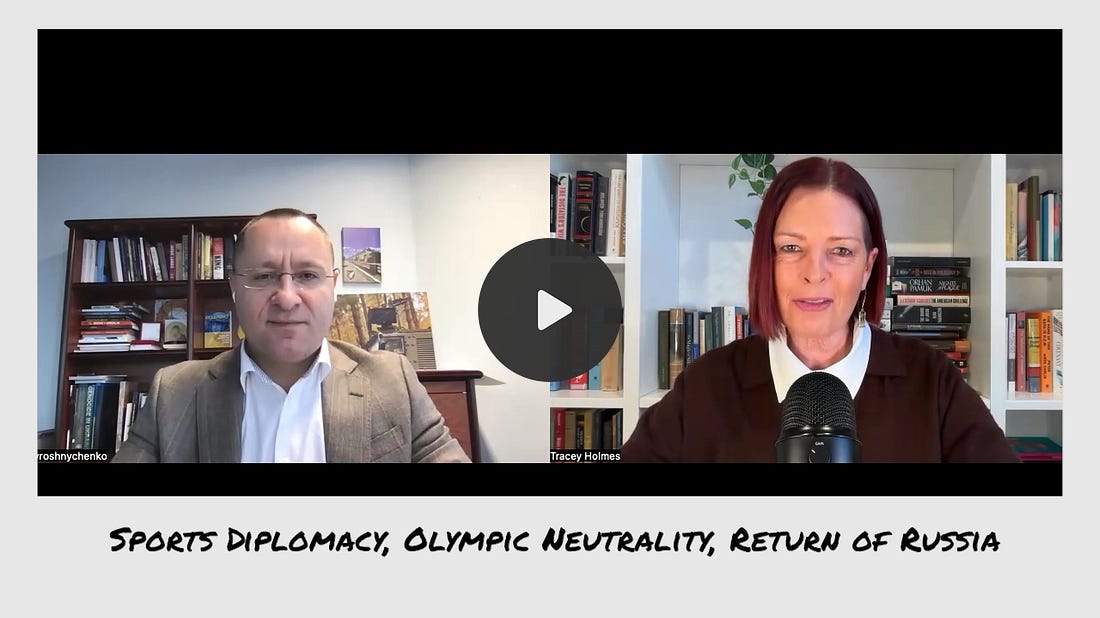
You're currently a free subscriber to The Sports Ambassador. For the full experience, upgrade your subscription.
© 2026 Tracey
|




 Posts
Posts


No comments:
Post a Comment