The City of Pittsburgh's financial situation is bleaker than was previously known, Mayor Corey O'Connor explained at a press conference on Thursday, during which he announced his intention to "reopen" the 2026 budget to ensure it reflects the city's true financial condition. While he was unwilling to concede that serious cuts to city spending are necessary, he will eventually be forced by financial reality to do so.
While the city is burdened by structural financial difficulties, Thursday's announcement was less about that and more about the discovery of new forms of financial mismanagement and malfeasance committed by the Gainey administration. O'Connor was careful not to mention his predecessor, and declined multiple invitations offered by reporters to accuse Ed Gainey of deceiving City Council and the public — and of leaving O'Connor "holding the bag."
But that is clearly what happened, and what was implied by pointedly calling the press conference a "transparent and honest update on the City's financial position."
How we got here, though, is less germane than what must be done now. O'Connor's press conference was highly detailed about the nature of the problem, but less so about the the solution. The truth is that everything but core city services must be considered for the chopping block.
Road to ruin
Here are the key numbers revealed on Thursday. The 2025 budget, as passed at the end of 2024, was supposed to have a $3 million surplus. It ended up, with final audits still pending, at a $8.6 million deficit. This was caused in large part, as the Post-Gazette Editorial Board argued strenuously last year, by knowingly underbudgeting for city worker overtime, especially in public safety.
But it turns out — and this was only hinted at by O'Connor — that the deficit should have beenmuch higher. That's because the Gainey administration put off some required expenditures, including paying major invoices, until the new year. That is, until O'Connor took office.
For instance, at the end of the presser, Office of Management and Budget Deputy Director Rea Price described nearly $2 million in legal and fleet maintenance invoices that had been left unpaid, keeping them off the 2025 books. It is also our understanding that the $9 million in "City healthcare contributions" in the O'Connor administration's list of "underfunded items" refers to unpaid bills for employee health services, which the city pays because it is self-insured.
Other tricks deployed to downplay the city's financial distress include using Parks Trust Fund monies to fund everyday operations as opposed to long-term upgrades, as we have previously criticized, as well as underfunding some city-worker retirement obligations.
Altogether, this means that the 2025 budget deficit had been kept artificially low. Many of those bills are now due, meaning that the 2026 budget is also out of whack, as is the entire five-year financial forecast.
The O'Connor administration estimates that the current budget understates city obligations by more than $40 million over the next five years. And this is the budget that was fixed by City Council, including a 20% tax hike. Without that infusion of revenue, at the first proposed trajectory the city's reserves would have been completely drained by 2030.
Limited options
This problem is easier to describe than to fix. We were encouraged that O'Connor identified growing the city's economy and population as a key part of the solution, but that is a long-term goal, not a short-term fix. O'Connor also stated that the city "is not currently considering new taxes, layoffs or cuts to critical city services."
The mayor is right to rule out new taxes: The city got a 20% boost in December, and can't go back to the property tax well for at least several years. O'Connor's team should investigate other revenue generation options, but state law severely restricts cities' tax-levying powers.
Layoffs are more complicated. Termination of existing employees is governed in many cases by union contracts, one of whose main purposes is to make it difficult to ditch workers. These rules also make it difficult to make decisions based on merit rather than, for instance, seniority. This means layoffs are time-consuming, potentially expensive and risky, in that they can result in real losses to productivity and efficiency.
What O'Connor can do much more easily is eliminate budgeted positions that have remained unfilled, with minimal or no bad effects for city services. This is somewhat fake, in that the city isn't saving money, but it is streamlining its budget to better reflect reality.
As for "critical city services," the word "critical" is doing a lot of work. Clearly, while the financial situation is dangerous, actually gutting core services is neither necessary nor prudent. The question is: What counts, and what doesn't, as a "critical city service"?
Common core
This is where the hard decisions must be made. The truth is that during the optimistic years after emerging from Act 47 state oversight, followed by the influx of federal pandemic relief funds, the city took on several non-core responsibilities. A good example was spending $3 million in federal money on a "Food Justice Fund" while ambulances were breaking down.
These attempts to intervene in the broader social fabric of the city are well-intentioned, and may be valuable — but they are not "critical." As the O'Connor administration looks for areas to cut back, the low-hanging fruit should be the newly minted trust funds that drain city resources for unclear benefits.
The Housing Opportunity Fund and the Stop the Violence Fund each consume $10 million a year, though the latter is only getting $5 million this year, due to the budget crunch. The social goods these funds aim at are worthwhile, but affordable housing and violence prevention can also be achieved by other means.
We'd love to see the O'Connor administration look for creative ways to make a difference in these areas, such as private-sector and philanthropic partnerships, without draining $20 million from the city's coffers each year.
With better management in previous years, these funds might have been sustainable. But now the bills have to be paid.
First Published: March 15, 2026, 4:00 a.m.








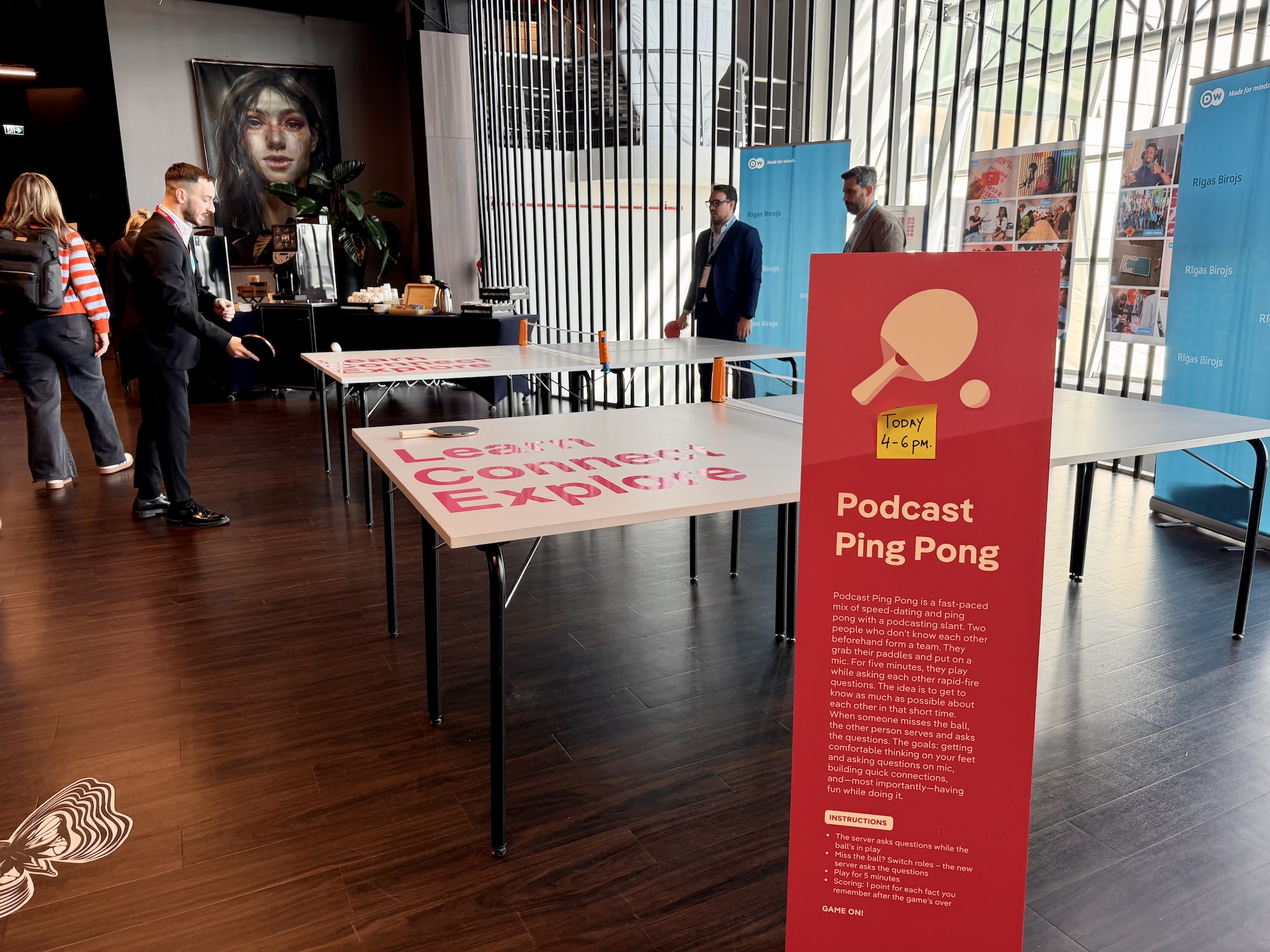 At Radiodays Europe in Rīga, Latvia - "podcast pingpong". The sport is described as a "fast-paced mix of speed-dating and ping pong with a podcasting slant", a five-minute game of pingpong while asking rapid-fire questions of your opponent. At least one competitive podcaster was seen making allegations about a substandard table surface.
 #1 in Apple Podcasts (US)
 #1 in Spotify (US)






































































 Broken Hurd.
 Kate Lundsten
 Matt Kredich
 Ray Looze

 Posts
Posts


