
Print as many coupons as you have in your party.
Ravenstahl site drops photos - Pittsburgh Tribune-Review Peduto criticized the mayor's use of the photos.One of the worst ethical campaign act that dealt with 'photos' was the campaign commercial that was filmed by Tom Murphy in the Mayor's office for the benefit of Ed Rendell. Murphy used his office for a TV ad.
'I think it's a violation of state ethics. It's very clear that you cannot use government property for political purposes,' Peduto said.
A spokesman for the State Ethics Commission did not return a call seeking comment.
Ravenstahl site drops photos - Pittsburgh Tribune-Review Pittsburgh Mayor Luke Ravenstahl's campaign on Wednesday removed at least five photos from its Web site because they look a lot like pictures taken by city employees that appear on the city's official Internet site.Well done fellow bloggers. Well done.
'We're trying to be scrupulous in following the letter of the law,' said Damon Andrews, Ravenstahl's campaign manager.
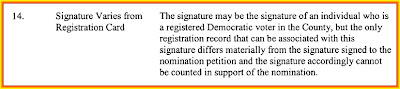 |
| From Art from friends |


 |
| From planning-urban |
kdka.com - Could New Arena Spark Develoment In Hill District(KDKA) HILL DISTRICT Now that the new arena is going to be built just across the street from the silver-domed Mellon Arena many residents of the Hill District are beginning to wonder if it could spark new development in their neighborhood.The answer to the question is clear to me. In my humble opinion, the new arena will NOT be a boost to the area's development in terms of what is most desired and needed.
In the �50s, the construction of a new arena had many Hill District residents excited. But that promise never really materialized.
However, now, a new arena is in the Hill District�s future.
"Now that the Penguins are here for the next 30 years we're hoping that we're going to have some good relationships," says Reverend Johnnie Monroe, of Grace Memorial Church, in the Hill District.
kdka.com - Site Preparations Underway For New Arena The Sports and Exhibition Authority has spent the last several weeks buying up buildings around the site; and preparations are already underway as a contract has been put out to demolish those buildings to make room.Not only do we have the loss of the Civic Arena, but there are a dozen buildings going to vanish as well. Those buildings are being replaced by tax-free properties owned by the public authority. Less taxes are going to be collected as more of the city goes to 'non-profit status.'
In all, 12 buildings will come down to make room for construction.
Some of the structures coming down to make way for the arena include the old Labor Council District building and the aged St. Francis Central Hospital.
The new arena will be built on a six and a half acre site, which is right across the street from the old Mellon Arena.
Historic Review Commission - PittsburghPlatform MediaThe new multi-purpose arena deal needs to NUKE the historic civic arena.
* Places: Did vote doom commission chairman? - Post-Gazette, March 2007, Michael Eversmeyer, chairman of the city's Historic Review Commission, got a Dear John letter from Mayor Luke Ravenstahl last month."
After 133 years, the Pennsylvania General Assembly should approve an enabling act for a true citizens’ constitutional convention.
In 1872, the citizens of Pennsylvania agreed to convene in a dedicated review of the frame of government. At that constitutional convention, much of the focus was on the abuses of special legislation, disturbing and fraudulent election practices, and the structure of the state’s court system.
The convention lasted just over a year, where these and other issues were hotly debated by statesmen of the day. Although there were court challenges to the proceedings and fractional political groups voicing strong opposition, the press covered the convention faithfully and produced largely favorable editorials.
When Pennsylvanians confronted the new Constitution at a special election, they adopted it by a two to one margin. This was the last time citizens fully participated in such a broad review of government at a convention. Since then, constitutional change has been carried out in piecemeal fashion by the hands of others.
Between 1901 and 1959, 86 constitutional amendments emanated from the legislature. 59 were adopted by the voters. All were minor sectional changes to the document, and as the mood of voters changed from year to year, so did their embrace of amendments.
Running parallel to this incremental and unpredictable path of change were periodic pushes for general revision instigated by various Governors: The Sproul Commission in 1921, a separate pre-depression effort by Gifford Pinchot, the 1935 Earle Advisory Committee and the Woodside Commission in 1959. These efforts all failed to produce any constitutional change whatsoever.
In 1961, an alternative plan was conceived. William Schnader, who led the Earle Committee and was serving as president of the Pennsylvania Bar Association, urged the group to get involved. By 1963, 14 committees of the Bar Association produced a comprehensive plan - dubbed Project Constitution - to amend the Constitution in article-sized chunks rather than the small sectional bites taken since 1874.
Governor William Scranton took office in 1962 with constitutional change as a high priority. In 1963 the legislature proposed a convention to the electorate. The Bar Association was prepared to submit its plan to the convention, but the voters refused to authorize one.
Scranton then prompted legislative introduction of several of the Bar Association’s “article by article” amendments. Scranton was term-limited out of office in 1966, but he and successor Raymond Shafer successfully shepherded nine amendments through the legislative and voter adoption processes by mid-1967. At the same time, voters approved a convention to consider the remaining articles and the issue of apportionment.
By the time delegates gathered in Harrisburg, the convention’s preparatory committee, consisting entirely of the Lt. Governor and legislative leaders, had already set the agenda. 69 of the 163 delegates to the convention - including 9 of the 13 preparatory committee members - were lawyers.
The delegates carried out their duties and adjourned just 79 minutes before a mandated deadline. When the convention’s recommendations were approved by the electorate eight weeks later, the citizens’ Constitution of 1874 became history, replaced by something rewritten and rearranged on a wholesale scale by the Pennsylvania Bar Association.
While the 1967 convention was indeed of the “limited” variety, it was only because most of the job had already been completed through the Bar Association’s article-by-article amendment process.
To be sure, constitutional change in Pennsylvania since 1874 hasn’t been all bad, but it has only occurred with the sovereign people sitting in the grandstands, relegated to merely ratifying the notions of others rather than molding government in their own hands.
Whenever a crisis in public confidence occurs, any correction or reform must be aimed squarely at the underlying causes. The crisis of the 1870’s was wholly internal, directly caused by actions and abuses within the institutions of government. During the 1960’s, the causes were largely seen as external to government: stunted population growth, the loss of employable young people, and dismal economic conditions.
Clearly, Pennsylvania’s current crisis of confidence more closely resembles the former than the latter. After 133 years, the General Assembly should approve an enabling act for a true citizens’ constitutional convention.
It must be a convention with a deliberate emphasis on the common interest, rather than self-interest. The process must look forward as well as backward, and it must be focused on the structure and integrity of government rather than partisan issues.
At such a convention, Pennsylvanians would shape a government prepared to take on the challenges of the future, restore the virtues of self-governance and blaze a trail for the rest of the nation to follow. Anything less would simply be unacceptable.
Permission is hereby granted to reproduce, publish and/or distribute this article in its entirety.
About PACleanSweep
PACleanSweep is a non-partisan effort dedicated to returning honor, dignity and integrity to government in Pennsylvania. For more information, please visit www.PACleanSweep.com.
Russ Diamond, Chair, chair@pacleansweep.com, 717.383.3025
AntiRust: This Arena Deal Sucks This Arena Deal Sucks
I am eating some sour grapes these days. Sour grapes that have been marinating in gasoline and splintered glass.
Pi Day - Wikipedia, the free encyclopedia Pi Day and Pi Approximation Day are two unofficial holidays held to celebrate the mathematical constant π (Pi). Pi Day is observed on March 14.
Another neighbor, dressed in a sweater and flip-flops and sporting the scent familiar to those after spending a night around a campfire said, "Hope everyone is okay." Erik, with instrument, headed to school. Meanwhile, South 12th Street, between Bradish and Freyburg, was dripping wet from the fire trucks.
Ben Howland Thinks CBS Manipulates the Brackets | NCAA Football Blog - The FanHouse: UCLA coach Ben Howland implied yesterday that he thinks the network does, indeed, manipulate the brackets, and that's why his team's first three games could include the storylines of Howland coaching against his alma mater (Weber State), then against the school where he got his first coaching job (Gonzaga), then against the school he coached before UCLA (Pittsburgh).Ben, the air is thin when you are at the top of the world. I hope the UCLA players don't have to take a charge, tip-toe near the out of bounds line, or otherwise play a competitive game throughout the tournament.
 |
| From texture - misc. |
Early Returns - A Post-Gazette Journal Campaign contributionCount on a robust independent candidate in the fall. And, I've emerged already.
Kevin Acklin could wind up with a county salary of $9,000 next year. The Point Breeze lawyer is running against Charles McCullough of Upper St. Clair for the GOP nomination for an at-large seat on county council next year. Under the county charter, the two at-large seats can't both be held by the same party. Unless some robust independent candidate emerges in the fall, therefore, the Democratic and Republican primaries determine those seats.

 Posts
All Comments
Posts
All Comments


